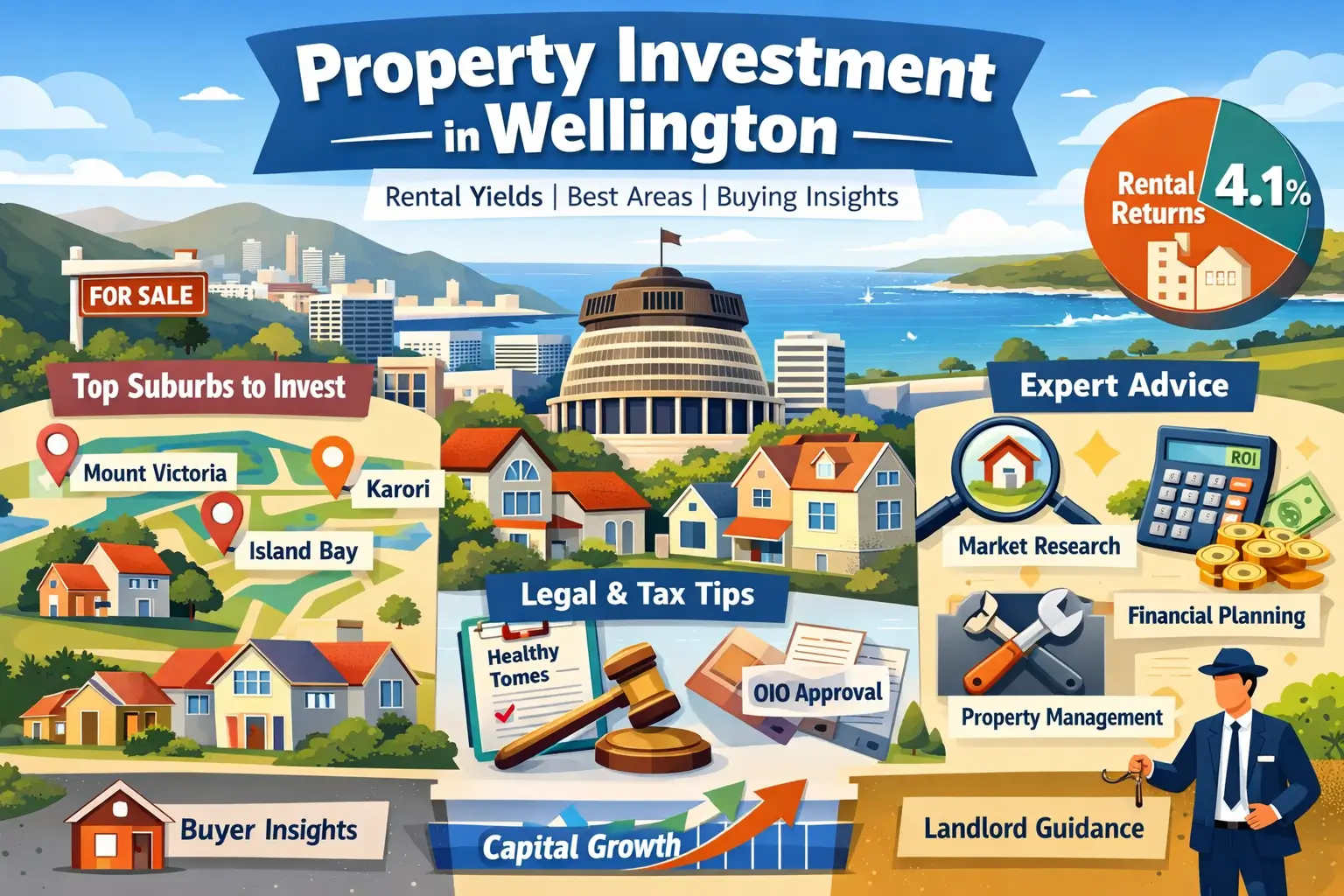
Property investment for rental income involves purchasing real estate with the primary objective of generating regular cash flow through tenant rent while preserving or increasing the property’s long-term value. For new investors, success depends less on speculation and more on disciplined financial analysis, location fundamentals, realistic yield expectations, and a clear understanding of operating costs and legal obligations.
What Is Rental Property Investment?
Rental property investment is the acquisition of residential or commercial real estate with the intention of leasing it to tenants in exchange for rent. The investor’s return is generated from two sources: net rental income after expenses and potential capital appreciation over time.
From a practical standpoint, rental income investing is not passive ownership. It requires active decision-making around tenant selection, maintenance planning, financing structure, and compliance with landlord–tenant laws. Unlike short-term trading, rental investment performance is measured over years, not months.
For new investors, rental property investment is typically structured around stable, long-term demand drivers such as employment access, population growth, transport links, and essential amenities. Properties purchased purely for appreciation without rental viability expose investors to higher volatility and cash-flow risk.
Why Invest in Property for Rental Income?
Property is widely used as a rental income asset because it can produce predictable monthly cash flow while acting as a hedge against inflation. When rents rise over time, income often adjusts faster than fixed-rate debt, improving long-term yield.
Rental property also allows investors to use leverage responsibly. By financing part of the purchase through a mortgage, investors can control a higher-value asset with a smaller initial capital outlay, provided rental income comfortably covers loan repayments and operating costs.
Another core advantage is control. Unlike many financial instruments, property investors can directly influence performance through renovation decisions, rent reviews, cost management, and tenant quality. This makes rental property particularly suitable for investors willing to be involved rather than speculative.
Types of Rental Properties for New Investors
Choosing the right property type is one of the most important decisions for a first-time rental investor. Each category carries different income stability, management intensity, and risk exposure.
| Property Type | Income Stability | Management Complexity | Typical Investor Profile |
|---|---|---|---|
| Single-Family Homes | Moderate | Low | First-time investors seeking simplicity |
| Apartments / Condos | Moderate to High | Moderate | Urban-focused investors |
| Multi-Family Properties | High | High | Cash-flow-oriented investors |
| Short-Term Rentals | Variable | High | Experienced or hands-on operators |
For most new investors, single-family homes and small apartments provide the best balance between manageable risk and consistent rental demand. Larger multi-family properties can improve income resilience but often require stronger financial buffers and professional management.
Short-term rentals may appear attractive due to higher gross income potential, but they are highly sensitive to regulation, seasonality, and operating costs. These factors make them less suitable as a first rental investment unless local regulations and demand are clearly understood.
How to Analyse Rental Property Financials
A rental property is financially viable only if its net income remains positive after all recurring and non-recurring costs are accounted for. New investors should evaluate properties using conservative assumptions rather than optimistic rent projections.
The starting point is gross rental income, based on realistic market rent for comparable properties, not advertised asking prices. From this figure, vacancy allowances, operating expenses, and financing costs must be deducted to calculate net operating income (NOI).
Financial analysis should also include stress testing. Investors should assess whether the property remains affordable if interest rates rise, rents stagnate, or unexpected maintenance costs occur. Properties that only perform under ideal conditions present elevated risk.
Rental Yield vs Cash Flow Explained
Rental yield measures annual rental income as a percentage of the property’s purchase price, while cash flow represents the actual monthly surplus or deficit after expenses and loan repayments. Both metrics are necessary, but they answer different questions.
| Metric | What It Shows | Why It Matters |
|---|---|---|
| Gross Yield | Annual rent ÷ purchase price | Quick comparison between properties |
| Net Yield | Income after expenses ÷ purchase price | Realistic profitability indicator |
| Cash Flow | Monthly income minus all costs | Affordability and risk control |
A property can show an attractive yield on paper yet still produce negative cash flow if financing costs are high. New investors should prioritise sustainable cash flow over headline yield percentages.
True Costs of Owning a Rental Property
Many first-time investors underestimate the full cost of ownership. Rental property expenses extend well beyond mortgage repayments and must be budgeted annually.
| Cost Category | Frequency | Investor Impact |
|---|---|---|
| Maintenance & Repairs | Ongoing | Protects asset value |
| Property Management | Monthly | Reduces time burden |
| Insurance | Annual | Risk mitigation |
| Taxes & Fees | Annual | Legal compliance |
| Vacancy Allowance | Variable | Cash flow buffer |
Setting aside a maintenance reserve from rental income helps prevent financial strain when unexpected repairs arise. Properties without adequate reserves often force investors to inject personal funds.
Financing Options for New Property Investors
Financing structure directly affects cash flow, risk exposure, and long-term returns. Most rental investors use mortgage financing, but loan terms vary significantly for investment properties.
Investment loans typically require higher deposits, attract higher interest rates, and apply stricter affordability assessments than owner-occupied mortgages. Fixed-rate loans provide repayment certainty, while variable rates offer flexibility but expose investors to rate fluctuations.
Conservative investors often prioritise loan structures that allow early repayments and maintain liquidity, even if headline interest rates are marginally higher.
Legal and Regulatory Responsibilities
Rental property ownership carries enforceable legal obligations. Investors must comply with local landlord–tenant laws covering safety standards, habitability, deposit handling, and eviction procedures.
Failure to meet regulatory requirements can result in fines, rent repayment orders, or legal disputes. New investors should familiarise themselves with licensing requirements, rental registration rules, and tenant rights before purchasing.
Common Rental Investment Mistakes
The most frequent mistake among new investors is overestimating rental income while underestimating expenses. This often leads to cash flow shortfalls and forced asset sales.
Other common errors include ignoring local demand fundamentals, selecting properties based on aesthetics rather than numbers, and failing to plan for vacancies or major repairs.
Successful rental investing is built on discipline, conservative assumptions, and long-term planning rather than short-term optimism.
How to Choose the Right Location for Rental Income
Rental income performance is driven primarily by location fundamentals rather than the property itself. A well-located average property typically outperforms a high-quality property in a weak rental market.
Investors should prioritise areas with consistent tenant demand supported by employment hubs, transport connectivity, healthcare access, and educational institutions. Low vacancy rates and stable population growth indicate rental resilience across economic cycles.
Local regulations also matter. Rent controls, licensing requirements, and zoning restrictions can materially affect achievable income and compliance costs. Location selection should therefore balance demand indicators with regulatory clarity.
Tenant Selection and Ongoing Management
Tenant quality has a direct impact on rental income stability, property condition, and legal risk. Effective tenant screening reduces arrears, disputes, and turnover costs.
Standard screening includes income verification, employment checks, rental history, and credit assessment where legally permitted. Consistent screening criteria help maintain fairness and regulatory compliance.
Ongoing management involves rent collection, maintenance coordination, inspections, and legal documentation. Investors must decide whether to self-manage or appoint professional property managers based on time availability, portfolio size, and local complexity.
Long-Term Strategy and Exit Planning
Rental property investment should be guided by a defined long-term strategy established at purchase. This includes target holding period, income objectives, and exit options.
Common exit strategies include selling after capital appreciation, refinancing to release equity, or retaining the property as a long-term income asset. Each option has tax, liquidity, and market timing implications.
Investors who plan exits early are better positioned to adapt to market changes without being forced into suboptimal decisions during downturns.
Frequently Asked Questions
How much money do I need to start investing in rental property?
The required capital depends on purchase price, deposit requirements, taxes, and reserves. Most investors need enough funds to cover the down payment, transaction costs, and several months of operating expenses.
Is rental property a good investment for beginners?
Rental property can be suitable for beginners if approached conservatively, with realistic cash flow analysis and a focus on stable demand rather than rapid appreciation.
What is a good rental yield for investment property?
A “good” yield varies by market and risk profile. More important than yield alone is whether the property produces sustainable positive cash flow after all costs.
Should I manage my rental property myself?
Self-management can reduce costs but requires time and legal knowledge. Professional management may improve compliance and tenant retention, particularly for new investors.
What are the biggest risks in rental property investment?
Key risks include prolonged vacancies, unexpected maintenance costs, regulatory changes, and interest rate increases. Proper planning and reserves help mitigate these risks.
Key Takeaways
- Rental income investing is a long-term discipline: Success depends on fundamentals, not speculation.
- Cash flow matters more than headline yield: Sustainable income protects against market volatility.
- Location drives demand: Employment access and amenities underpin rental stability.
- Costs and compliance are unavoidable: Accurate budgeting and legal awareness are essential.
- Strategy should be defined early: Clear entry and exit planning improves decision-making.
References
- International Property Measurement Standards Coalition (IPMSC) – Rental Property Metrics
- OECD Housing Market Analysis Reports
- UK Ministry of Housing – Private Rented Sector Guidance
- U.S. Department of Housing and Urban Development – Rental Housing Resources