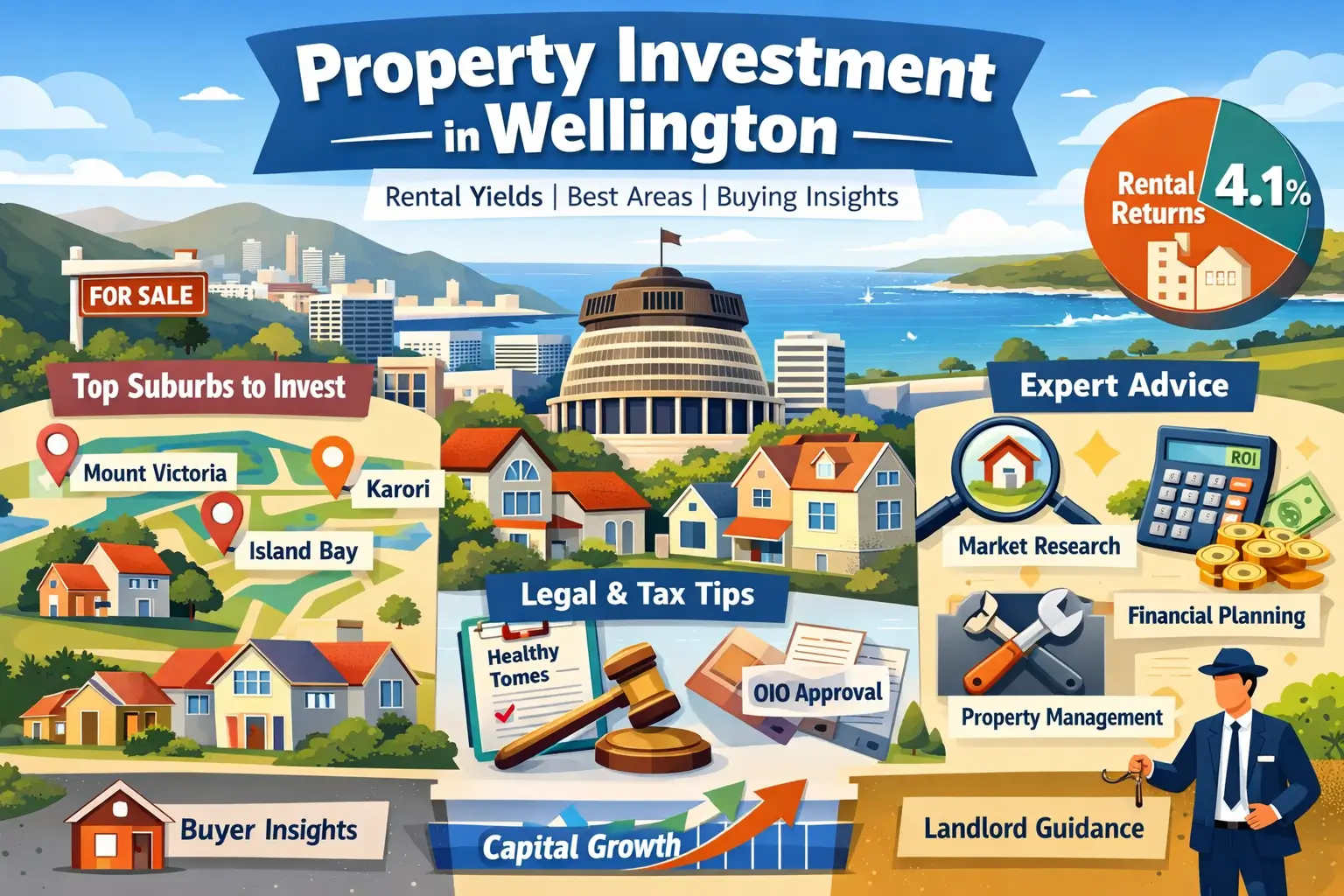
If you are considering property investment in Wellington, understanding rental yields, the most promising areas, and practical buying insights is essential. Wellington’s property market offers opportunities for both capital growth and rental income, but success requires clear knowledge of market trends, area-specific performance, and the steps involved in purchasing property.
Wellington Property Market Overview
Wellington, the capital of New Zealand, has a property market influenced by government employment, infrastructure development, and lifestyle demand. The city’s residential property market shows steady growth, supported by high rental demand from professionals, students, and government employees. House prices have increased consistently over the past decade, though growth rates have moderated compared to Auckland.
Investors should note that Wellington’s market is diverse. The central city and inner suburbs offer apartments and townhouses, while outer suburbs predominantly feature family homes. Property types, location, and condition significantly affect potential returns and long-term capital growth.
Average Rental Yields in Wellington
Rental yield is the annual rental income divided by the property’s purchase price, expressed as a percentage. In Wellington, gross rental yields vary by property type and location.
| Property Type | Average Gross Yield (%) |
|---|---|
| Apartments (1–2 bedrooms) | 4–5% |
| Townhouses | 3.5–4.5% |
| Standalone Houses | 3–4% |
Investors typically see higher yields in suburbs with strong rental demand and lower purchase prices relative to central Wellington. Inner-city apartments may have lower yields but offer greater capital growth potential, while outer suburbs often provide better cash flow but slower appreciation.
Best Areas for Property Investment
When evaluating Wellington for property investment, location is key. Several suburbs consistently perform well due to proximity to employment hubs, transport, schools, and lifestyle amenities.
| Suburb | Property Type Focus | Key Investment Advantage |
|---|---|---|
| Thorndon | Heritage homes, apartments | Close to government offices, high rental demand |
| Mount Victoria | Apartments, townhouses | Inner-city living, strong capital growth potential |
| Karori | Standalone houses, townhouses | Family-oriented, good schools, consistent rental demand |
| Island Bay | Houses | Coastal location, attractive for tenants seeking lifestyle |
| Petone | Houses, apartments | Commuter-friendly, upcoming infrastructure improvements |
Investors should weigh the balance between rental yield and capital growth. Central Wellington suburbs often favour capital growth, while outer suburbs provide stronger yields but may appreciate more slowly.
Practical Buying Insights
Investing in Wellington requires careful planning. Key considerations include finance, legal compliance, and property management.
- Finance: Securing pre-approval from banks or lenders helps investors understand borrowing capacity and interest rates. Wellington properties typically require a minimum deposit of 20–30% for investors.
- Legal Due Diligence: Investors must comply with New Zealand’s Overseas Investment Act if not a resident, plus standard conveyancing processes. Titles, LIM (Land Information Memorandum) reports, and building consents should always be checked.
- Property Condition: Older homes may need earthquake strengthening, given Wellington’s seismic activity. Structural inspections and insurance considerations are essential.
- Property Management: High-quality tenants and efficient management maintain rental income stability. Hiring a licensed property manager in Wellington can reduce vacancy rates and ensure compliance with tenancy laws.
Understanding Wellington’s market cycles and planning for holding costs—rates, insurance, maintenance—is critical for long-term profitability. Investors should consider both rental income and potential for capital growth when making purchase decisions.
Current Market Trends in Wellington
As of early 2026, Wellington’s property market reflects a balance between steady demand and moderate price growth. Factors influencing trends include:
- Government Employment: A stable public sector workforce drives demand for central and inner-city rentals.
- Infrastructure Development: Projects like the Wellington Light Rail and new road upgrades increase desirability in connected suburbs.
- Interest Rates: Moderate mortgage rates influence investor borrowing and purchasing strategies.
- Rental Demand: Professionals and students maintain strong demand, particularly for apartments and small houses near the CBD and universities.
Investors should monitor property price growth vs. rental yield trends. While central suburbs may appreciate faster, outer suburbs often provide more reliable cash flow.
Comparing Property Types for Investment
Different property types in Wellington suit different investment strategies. Understanding their strengths and risks is essential:
| Property Type | Average Yield | Capital Growth Potential | Key Risk Factors |
|---|---|---|---|
| Apartments (CBD & Inner Suburbs) | 4–5% | High | Body corporate fees, oversupply, older buildings may need seismic strengthening |
| Townhouses | 3.5–4.5% | Moderate | Strata management issues, smaller land size can limit long-term growth |
| Standalone Houses | 3–4% | Moderate–High | Higher purchase cost, maintenance, location-dependent yield |
Investors seeking regular cash flow may prioritise outer suburbs with standalone houses or townhouses, while those focused on long-term capital appreciation often prefer apartments or premium inner-city locations.
Legal & Financial Considerations
Investing in Wellington requires compliance with legal and financial frameworks to avoid pitfalls.
- Foreign Investment Rules: Non-residents must follow the Overseas Investment Act, requiring approval for certain residential purchases.
- Mortgage & Financing: Typical investor deposits range from 20–30%, with interest rates influencing net yields. Fixed or variable rate options should be compared.
- Taxation: Rental income is taxable. Capital gains are generally exempt unless properties are part of a profit-making scheme or sold within certain “bright-line” periods.
- Insurance: Earthquake-prone buildings need specialised coverage. Comprehensive insurance protects rental income and property value.
- Conveyancing & LIM Reports: Conduct thorough title checks, LIM reports, and building inspections to ensure legal clarity and structural safety.
Common Investor Mistakes
Even experienced investors can make errors in Wellington’s property market. Avoid these pitfalls:
- Overestimating rental yield: Ignoring vacancy periods, maintenance, and management fees.
- Neglecting property inspections: Failing to check structural integrity, seismic compliance, or renovations needed.
- Choosing low-demand areas: Opting for locations without stable rental demand or infrastructure access.
- Underestimating holding costs: Rates, insurance, and unexpected repairs can reduce net returns.
- Ignoring market cycles: Buying at market peak without long-term strategy increases risk.
Expert Insights for Successful Investment
- Engage a licensed property manager to reduce vacancy and ensure compliance with tenancy laws.
- Focus on areas with consistent demand from government employees, students, or professionals.
- Balance rental yield with capital growth: High yields may not always deliver long-term gains.
- Consider property condition and potential upgrade costs; sometimes modest improvements significantly increase value and rent.
- Monitor Wellington’s infrastructure projects, as proximity to new transport links or urban renewal areas can drive growth.
Long-Term Investment Strategies
Successful property investment in Wellington often relies on long-term strategies rather than short-term gains. Core strategies include:
- Buy-and-Hold: Acquiring properties in stable suburbs and holding them over 5–10+ years to benefit from capital appreciation and steady rental income.
- Value-Add Investments: Purchasing older or underperforming properties and renovating to increase rental yield and property value.
- Diversification: Combining property types (apartments, townhouses, houses) across central and outer suburbs to balance growth potential and cash flow.
- Timing and Market Cycles: Understanding Wellington’s market fluctuations allows investors to enter when prices are reasonable relative to rental demand.
Long-term investors in Wellington typically focus on suburbs with infrastructure development, good schools, and consistent rental demand, as these factors drive both appreciation and occupancy stability.
Taxation Considerations for Investors
Taxation affects net returns and should be planned carefully:
- Rental Income Tax: All rental income is taxable under New Zealand law. Expenses such as rates, insurance, maintenance, and property management fees are deductible.
- Bright-Line Rule: Capital gains from properties sold within 10 years of purchase (for residential properties acquired after March 29, 2021) may be taxable unless it is the primary residence.
- Depreciation: Certain fixtures and fittings may be depreciated to reduce taxable income, though building depreciation rules have changed recently.
- Foreign Investors: Non-residents face additional reporting obligations and must comply with the Overseas Investment Act.
Consulting a local tax advisor is strongly recommended to optimise returns and ensure compliance with New Zealand regulations.
Property Management Tips
Effective property management enhances rental income and reduces vacancy risks. Key tips include:
- Hire licensed property managers familiar with Wellington tenancy laws.
- Screen tenants carefully, focusing on employment stability and rental history.
- Maintain properties proactively to prevent costly repairs and maintain market appeal.
- Regularly review rent levels against market benchmarks to maximise yield without increasing vacancy.
- Keep accurate records for tax and compliance purposes.
Risk Mitigation for Wellington Investors
Property investment carries inherent risks. In Wellington, common risks include seismic events, market fluctuations, and tenant turnover. Mitigation strategies include:
- Invest in properties meeting earthquake resilience standards or factor upgrade costs into purchase decisions.
- Diversify investments across suburbs and property types to spread risk.
- Keep contingency funds for maintenance and vacancy periods.
- Monitor local market conditions and infrastructure developments regularly.
Frequently Asked Questions
- What is the average rental yield in Wellington?
- Gross rental yields range from 3% for standalone houses to 5% for inner-city apartments, depending on location and property type.
- Which Wellington suburbs offer the best investment potential?
- Suburbs like Thorndon, Mount Victoria, Karori, Island Bay, and Petone are popular due to rental demand, lifestyle amenities, and capital growth prospects.
- Do foreign investors face restrictions?
- Yes, non-residents must comply with the Overseas Investment Act, requiring approval for most residential property purchases.
- How can I minimise investment risks?
- Diversify properties, ensure earthquake compliance, maintain adequate insurance, and engage professional property management.
- Are property management services necessary?
- While optional, professional property managers help maintain occupancy, ensure compliance with tenancy laws, and manage maintenance efficiently.
Key Takeaways
- Wellington Market Stability: Steady demand from government and professional tenants supports consistent rental income.
- Location Matters: Inner suburbs favour capital growth; outer suburbs typically provide higher yields.
- Property Type Selection: Apartments, townhouses, and houses each have unique yield and growth profiles.
- Legal & Financial Planning: Understanding taxation, mortgage options, and compliance reduces risk and maximises net returns.
- Professional Management: Engaging licensed property managers improves tenant retention and ensures legal compliance.
References
- Wellington City Council. Property and Land Information Reports. Accessed January 2026.
- Real Estate Institute of New Zealand (REINZ). Wellington Property Market Data 2025–2026.
- New Zealand Ministry of Housing and Urban Development. Housing Market Insights 2025.
- Overseas Investment Office, New Zealand Government. Residential Property Guidelines.
- Tenancy Services NZ. Property Management and Rental Law Guidance.