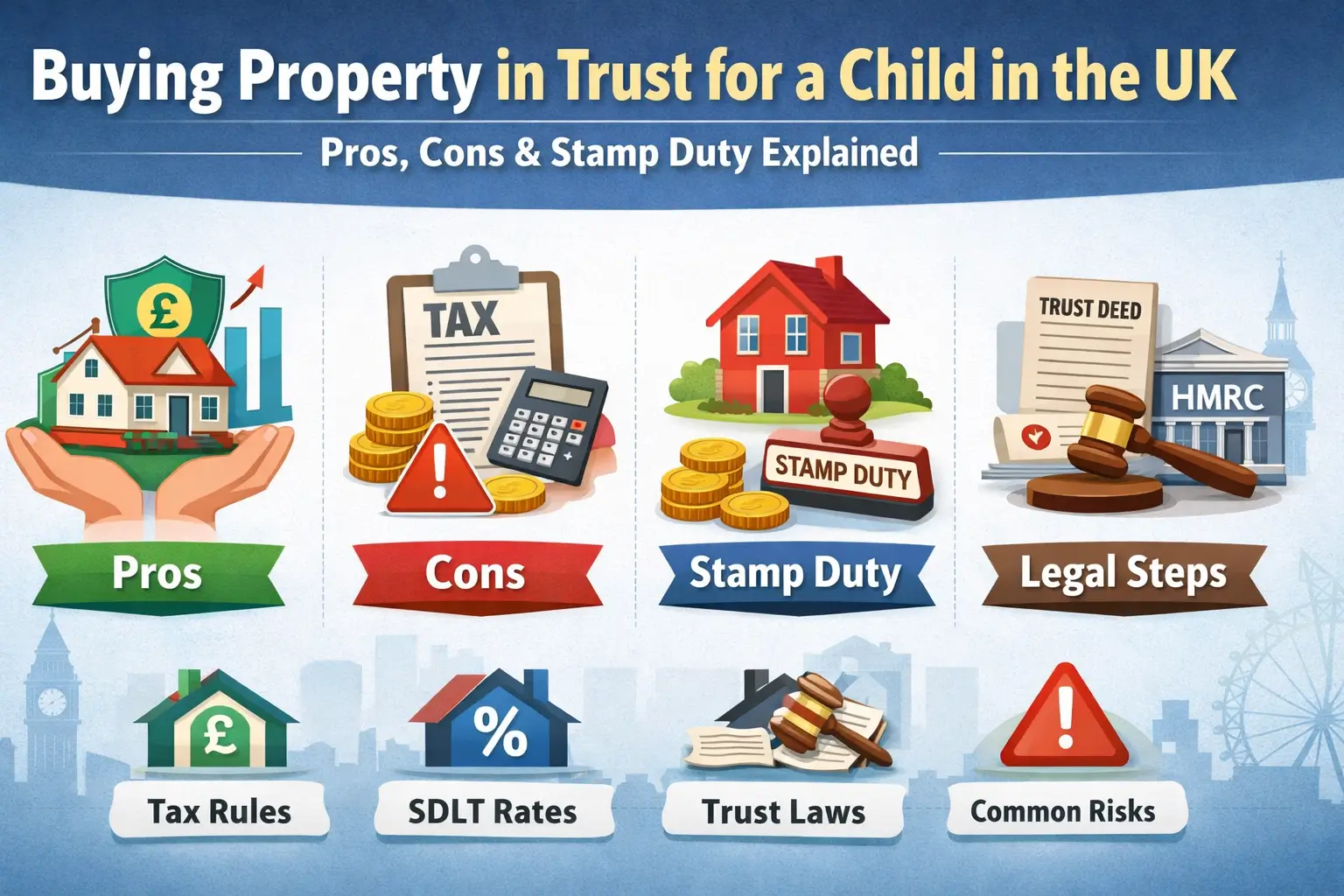
Buying property in trust for a child in the UK is legally permitted and commonly used for long-term wealth planning, asset protection, and inheritance structuring. In practice, it means purchasing a property where legal ownership is held by trustees, while the child is the beneficial owner, either immediately or at a defined future date. The structure affects stamp duty, tax treatment, mortgage eligibility, and control over the asset, making early understanding essential before proceeding.
What Does Buying Property in Trust for a Child Mean?
Buying property in trust for a child means the property is legally owned by one or more trustees, while the child is named as the beneficiary. The trustees manage the property according to the trust deed until the child reaches a specified age or condition, such as turning 18 or 25. The arrangement separates legal ownership from beneficial ownership, which is the defining feature of a trust.
In the UK, a minor cannot hold legal title to land. A trust is therefore the only lawful structure that allows a property to be purchased specifically for a child before adulthood. Trustees are usually parents or grandparents, but professional trustees can also be appointed.
From a legal standpoint, the Land Registry records the trustees as owners, with a restriction noting that the property is held on trust. The child’s interest exists in equity, not on the title register itself.
Why Parents Use Property Trusts for Children
Parents and grandparents use trusts primarily to control how and when a child benefits from a property asset. The trust structure allows the property to be purchased early, often decades before the child might otherwise afford it, while preventing premature access or forced sale.
A common motivation is long-term estate planning. When structured correctly, certain trusts can reduce inheritance tax exposure, particularly when assets are placed into trust well before death. Trusts can also ringfence property from divorce settlements, creditor claims, or poor financial decisions later in the child’s life.
For investors, trusts can also serve as a vehicle for intergenerational property investment. Rental income may be retained within the trust, used for maintenance, or accumulated for the beneficiary, depending on the trust terms.
Types of Trusts Used for Child Property Purchases
The type of trust used determines tax treatment, control, and stamp duty outcomes. The most commonly used trusts for buying property for a child in the UK are bare trusts, discretionary trusts, and interest in possession trusts.
A bare trust gives the child an absolute right to the property and any income from it once they reach 18. For tax purposes, the property is treated as belonging to the child, even while trustees manage it. This simplicity makes bare trusts popular, but they offer no protection once the child becomes an adult.
A discretionary trust gives trustees full control over how and when beneficiaries benefit. The child has no automatic right to the property or income. This structure provides maximum control and protection but comes with more complex tax rules and potentially higher stamp duty implications.
An interest in possession trust grants a beneficiary the right to income from the property, while ownership remains with the trust. This is less commonly used for minors but may appear in family wealth structures involving multiple beneficiaries.
Stamp Duty When Buying Property in Trust for a Child
Stamp Duty Land Tax (SDLT) treatment depends on the type of trust and whether the trustees already own residential property. There is no blanket exemption for buying property in trust for a child. In most cases, standard or higher SDLT rates apply based on trustee circumstances, not the child’s status.
For bare trusts, SDLT is assessed as if the child were the purchaser. However, because a minor cannot own property directly, HMRC looks at whether the trustees already own other properties. If trustees own additional residential property, the 3% higher-rate SDLT surcharge usually applies.
For discretionary trusts and most other trust types, HMRC treats the trustees as purchasers in their own right. If any trustee owns another residential property, the higher SDLT rate applies automatically, even if the property is intended solely for the child.
| Trust Type | Who SDLT Is Based On | Higher Rate Risk |
|---|---|---|
| Bare Trust | Trustees / Beneficiary context | High if trustees own other property |
| Discretionary Trust | Trustees | Very high |
| Interest in Possession | Trustees or life tenant | Case-specific |
First-time buyer relief is generally unavailable when buying through a trust, even if the child would otherwise qualify. This is a frequent and costly misunderstanding.
Mortgages and Financing Property Held in Trust
Financing a property held in trust is significantly more complex than a standard purchase. Most high-street lenders will not offer residential mortgages to trusts, particularly discretionary trusts, due to enforcement and risk concerns.
Where mortgages are available, they are typically offered to trustees personally, with the property held as trust property. Trustees are jointly and severally liable for repayments, regardless of the child’s beneficiary status.
Bare trusts are the most mortgage-friendly structure, as lenders can underwrite based on trustee income and treat the arrangement as transparent. Discretionary trusts usually require specialist lenders, higher deposits, and higher interest rates.
Cash purchases are therefore common when property is bought in trust for a child. This avoids lender restrictions but increases exposure to stamp duty and trust taxation rules.
Ongoing Tax Implications: Income Tax, CGT, and IHT
Property held in trust triggers ongoing tax considerations that differ markedly from personal ownership. These include income tax on rental income, capital gains tax on sale, and potential inheritance tax charges.
Rental income from property held in a bare trust is taxed as the child’s income. However, if parents are the settlors, anti-avoidance rules may apply, meaning income is taxed on the parent until the child reaches 18.
In discretionary trusts, rental income is taxed at the trust rate, which is higher than standard personal income tax rates once allowances are exceeded. Trustees must file annual trust tax returns.
Capital Gains Tax (CGT) applies when the property is sold or transferred out of trust. Trusts receive a reduced annual CGT allowance, and gains above this are taxed at higher residential property rates.
Inheritance Tax (IHT) exposure depends on trust type and timing. Discretionary trusts may face entry charges, ten-year anniversary charges, and exit charges. Bare trusts are generally treated as part of the child’s estate once the child becomes absolutely entitled.
Pros and Cons of Buying Property in Trust for a Child
Buying property in trust offers clear strategic benefits, but it also introduces cost, complexity, and long-term obligations that must be weighed carefully.
| Advantages | Disadvantages |
|---|---|
| Allows property ownership before adulthood | Higher SDLT exposure |
| Control over access and timing | Limited mortgage availability |
| Asset protection benefits | Ongoing trust administration costs |
| Estate planning flexibility | Complex tax compliance |
Trust-based ownership is rarely a shortcut to tax savings. It is best viewed as a control and planning tool rather than a transactional advantage.
Legal Steps to Buy Property in Trust for a Child
Buying property in trust for a child in the UK requires formal legal structuring from the outset. The trust must exist before or at the point of purchase, as retrospective trust declarations can trigger adverse tax consequences.
The process begins with drafting a trust deed that clearly defines the beneficiary, trustees, powers, and conditions under which the child becomes entitled. This document governs all future decisions relating to the property and is legally binding.
During conveyancing, the solicitor registers the trustees as legal owners at HM Land Registry, with a trust restriction placed on the title. This restriction prevents the property from being sold or mortgaged without trustee consent and compliance with trust terms.
Trustees must also register the trust with HMRC’s Trust Registration Service if it meets reporting requirements. Ongoing obligations include record keeping, tax filings, and acting strictly in the best interests of the beneficiary.
Common Mistakes and Expert Warnings
One of the most frequent mistakes is assuming that buying in trust automatically reduces stamp duty or tax exposure. In reality, trusts often increase SDLT liability and administrative costs.
Another common error is appointing trustees without fully understanding the long-term responsibility involved. Trustees are personally liable for compliance failures, tax penalties, and mortgage obligations where applicable.
Failing to consider what happens when the child reaches adulthood is also problematic. In bare trusts, the beneficiary gains full control at 18, regardless of maturity or financial capability. Once that entitlement arises, it cannot be reversed.
Finally, some buyers underestimate the impact of future legislative changes. Trust taxation is subject to regular reform, and structures that work today may become less efficient over time. Periodic professional review is essential.
Frequently Asked Questions
Can I buy a house in my child’s name in the UK?
No. A child cannot legally own property in England or Wales. A trust is required, with trustees holding legal title until the child becomes legally entitled.
Does buying property in trust avoid stamp duty?
No. Stamp Duty Land Tax still applies, and higher rates often apply when trustees already own property. Trust ownership does not create an SDLT exemption.
Can a trust qualify for first-time buyer relief?
Generally no. First-time buyer relief is rarely available for trust purchases, even if the beneficiary has never owned property.
Can the property be rented out while held in trust?
Yes. Rental income is permitted, but it is taxed according to trust type and anti-avoidance rules, particularly where parents are settlors.
What happens when the child turns 18?
In a bare trust, the child gains absolute ownership and control. In discretionary trusts, trustees retain control unless the trust deed states otherwise.
Key Takeaways
- Legal necessity: A trust is the only lawful way to buy property for a minor in the UK.
- Stamp duty risk: Trust purchases frequently trigger higher SDLT rates.
- Control vs simplicity: Bare trusts are simpler but offer no protection after age 18.
- Tax complexity: Income tax, CGT, and IHT rules differ sharply by trust type.
- Professional setup: Incorrect structuring can create irreversible tax and legal issues.
References
- HM Revenue & Customs – Stamp Duty Land Tax Manual
- HM Land Registry – Practice Guide on Trusts of Land
- UK Trust Registration Service Guidance
- Law Society of England and Wales – Property Ownership and Trusts