Strategies to Protect Returns During Yield Compression
Dec 19, 2025

If you have been tracking real estate markets lately, one phrase you must have heard repeatedly is yield compression. For some investors, it sounds like a quiet warning bell; for others, it looks like an inevitable market cycle. But what does it actually imply to you as an investor? More to the point, what do you do with your returns once yields begin to tighten?
Let’s explore this together. I will take you through the actual definition of compression in the yield, the reasons why it takes place, the effects it has on returns, and how experienced investors can go through this period without getting sleep-deprived.
Understanding Yield Compression
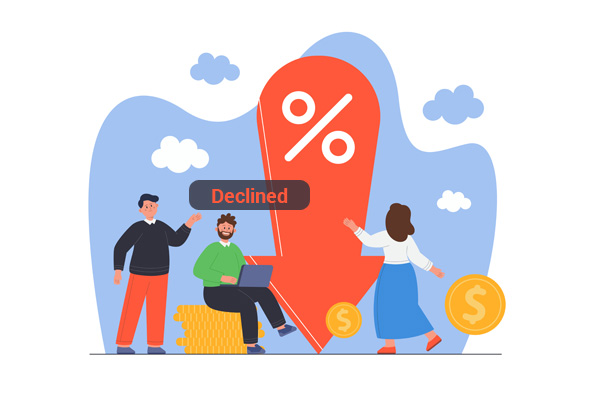
In its simplest form, yield compression is seen when the amount of rental income on a property is a low proportion of its purchase price. Suppose you purchased an office block 5 years ago at a price of 10 million dollars, and it was earning 800,000 dollars in annual rent. That’s an 8 per cent yield. Jumping into the present times, the identical kind of property will fetch 12 million dollars but will continue to bring 800,000 dollars annual rent. Your yield has just gone down to 6.7 per cent.
Why does this happen? Frequently, this is due to an influx of investors into the market, which increases the value of the property at a rate that surpasses that of the rent. It may also happen when the interest rates are low, and in this case, the real estate would be a more appealing option than bonds or other income-generating properties.
Simply put: yield compression implies that you are spending more money to earn the same amount of money on a property. That will wring profits out of it if you are not ready.
Why Yield Compression Matters
You might wonder, why does this issue attract so much attention from analysts, fund managers, and everyday landlords alike? The answer is simple: yield compression changes the entire risk–reward equation.
Take a moment to think about your own portfolio. If your rental income is steady but the price you paid for the asset keeps climbing, your initial return on investment is falling. That might be acceptable if you expect strong capital appreciation, but it becomes dangerous if the market cools or interest rates rise.
Moreover, compressed yields can tempt investors into riskier markets. I’ve seen landlords who once stuck to prime city-centre offices suddenly considering fringe retail units just to chase higher returns. That’s when mistakes are made.
Reflections from Market Cycles
I still remember the wave before the global financial crisis of 2008. Yields in many European capitals compressed so aggressively that offices in Paris, London, and Madrid were trading at historic lows. Everyone was excited, convinced that prices would keep climbing. When the market corrected, many investors who bought at the peak saw their returns wiped out.
Conversely, those who approached it more disciplinedly, focusing on the quality of tenants, lease term, and the basics of assets, not only flourished, but also gained. They were able to go through the storm since their properties continued to give them a solid cash flow even when their properties became less valuable.
This is a lesson worth remembering today. Yield compression is not necessarily a disaster, but it is a signal that you need to be more strategic.
Strategies to Protect Returns
So, what can you do when yields start tightening? Let’s walk through the strategies seasoned investors rely on.
Focus on Tenant Quality
The best protection against yield compression is a strong tenant. Constant rental revenue is more valuable than ever during the times when yields are put under pressure. Target tenants with good credit scores, companies in stable industries, and long-term growth.
Indicatively, the logistics companies related to e-commerce have made credible tenants in various markets. One of my friends, who is a warehouse owner in Germany and the United States, informed me that his tenants grew bigger even in times when the economy declined. That stability implied that his rental earnings did not go down.
Prioritise Lease Length and Structure
The first method to hedge yourself is to ensure that you make long leases that have embedded rental increases. When rents are automatically adjusted with inflation or there are step-ups with time, your income is in line with the increase in the acquisition prices.
I remember a business investor in Sydney who had signed a 15-year contract with a health care operator. The lease was CPI-adjusted, which implied that the rent was being raised yearly according to the inflation rate. Although property prices in that market tumbled to a drastic degree, his effective yield remained constant since his rent continued to increase.
Diversify Across Sectors and Geographies
All markets are not affected by yield compression in the same manner. In case core office yields become constrained, there may still be opportunities in areas such as student housing, senior living, or data centres. In the same way, when yields are scraping thin in the European capitals, they may be more productive in emerging secondary cities or suburban North American markets.
Also, diversification of portfolio among geographies can be used to mitigate risks. When there is overheating in one market, there may be another market that offers a space where yield can be increased.
Add Value through Asset Management
When yield compression via the market is something that is beyond your control, the only method to counterattack is through bettering the property itself. Imagine that you are producing your own yield. The redevelopment of communal space, an increase in energy efficiency, or even repositioning of an asset may release higher rents and hence compensate compressed yields.
To take an example, a single landlord that I have partnered with has been redesigning an old office block with co-working areas and improving digital connectivity. Initial expenditure was very high, and the rental revenue grew by almost 20 per cent on the property. That directly neutralised the stress of compression of yield.
Keep an Eye on Debt Costs
Often, yield compression coincides with low interest rates. But rates don’t stay low forever. If you are taking on debt to finance acquisitions, be careful not to over-leverage. Rising interest rates can quickly erode already thin yields.
One of the conservative strategies is to fix financing at rates where it is possible. This gives an element of predictability and protects you against market jolts.
Look Beyond Traditional Metrics
Conventional yield metrics do not necessarily say everything. Smart investors also pay attention to the internal rate of return (IRR), debt cover ratios, and possible exit strategies. Yield compression could downplay headline figures, but in case your long-term IRR is good because capital values have gone up or rent is being uplifted, the investment still may pay off.
The Psychology of Yield Compression
Beyond numbers, yield compression tests an investor’s mindset. Do you chase higher yields at all costs, even if it means compromising on quality? Or do you stay disciplined, knowing that safety sometimes beats speed?
Personally, I believe the best investors treat yield compression as a moment to reflect, not panic. It is easy to be swept up in market enthusiasm. Yet markets are cyclical. What looks compressed today might expand tomorrow if supply rises or demand cools.
The Global Perspective
At the international level, yield compression has not had a consistent cycle across the world. The economies in the Asia-Pacific, such as Tokyo and Seoul, have had a history of yield compression in major cities due to high institutional demand. The reduction of e-commerce in North America has seen the tightening of cap rates on logistics assets. In Europe, there have been continuous compressions of residential assets in cities like Berlin and Amsterdam due to shortages of housing.
These differences remind us that yield compression is not a universal verdict. It is context-specific. An investor’s strategy in Toronto might not work in Singapore, and what feels expensive in one market might still be attractive compared to another.
Final Thoughts
The compression of yield is no curse; it is an aspect of mobile markets. It is a good indicator of the high investor demand, but it makes us think harder. Your returns can be safeguarded and even increased by working on tenant quality, leasing arrangements, diversification, asset management, and financial discipline.
Ultimately, it is not the question of whether or not yield compression will occur. It always does, in cycles. The real question is: how are you going to answer it when it does?
About the Author