Key Drivers of Yield Compression in Real Estate
Dec 23, 2025

Yield compression, as the phrase has been thrown around in property market reports, meetings with investors, or the financial press, is something that you have most likely heard in the past decade. On the face of it, it may be technical, even abstract, but the reality is that yield compression has developed some of the largest real estate stories in the world, both bustling cityscapes and rural projects that initially looked like they were being over-priced, then the demand came back, and the whole development appeared perfectly reasonable.
However, what is it and what does it mean to investors? We must dump this idea bit by bit and work with simple and familiar words only.
What is Yield Compression?
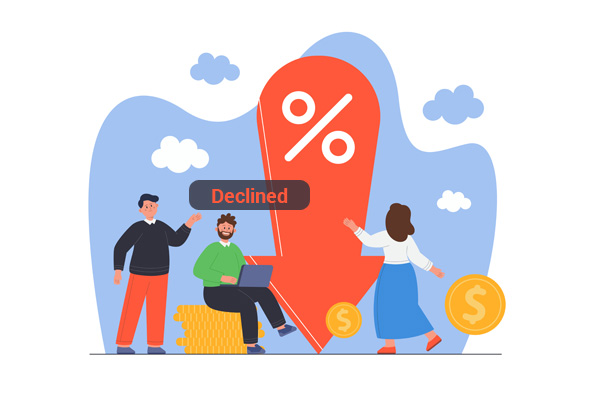
Yield compression occurs when the yields of property (rent as a proportion of purchase price) are decreasing. Suppose you purchase a small office block at $10 million, and the block yields a rent amounting to $800,000 every year. That’s an 8 per cent yield. The next few years are passing, and then arbitrarily, the same office blocks are being sold for $15 million, yet the rents are not correspondingly going up. It has since reduced to about 5 per cent.
This decline is what professionals call yield compression.
Why does this matter? Because lower yields usually indicate higher property values. Investors are willing to accept less annual return relative to price because they believe in the long-term security, stability, or growth of the asset. It’s the market’s way of saying: “This property type is hot, demand is strong, and we’re pricing it in.”
Why Yields Compress: The Big Picture
Whenever I explain this to new investors, I ask them: Would you rather own a stable but low-return property in a global capital city, or a high-yield property in a location that struggles to attract tenants? Most instinctively choose the first option, because safety often trumps raw return. And that’s at the heart of yield compression.
Among these drivers are various, and knowing them can guide us to make wiser decisions, not to overpay, and be ahead of the market changes.
Interest Rates and Monetary Policy
The most likely significant cause of yield compression is interest rates.
When central banks cut rates, borrowing becomes cheaper. Investors can afford to pay more for assets while still meeting their target returns. E.g. in the period of the 2008 financial crisis, interest rates in the US, the UK, and the greater part of Europe went down to a historic minimum. The massive yield compression was experienced in prime office towers in London and New York as investors crowded in.
Think about it like this: if government bonds are only giving you 1 per cent, a real estate yield of 4 per cent looks incredibly attractive, even though ten years earlier, 4 per cent might have been considered “expensive.”
Moreover, low interest rates create a global search for yield. Pension funds, insurers, and sovereign wealth funds move billions across borders chasing assets that provide stable income. Real estate, particularly in prime markets, often becomes the beneficiary.
Weight of Capital and Global Investment Flows
The other fact that is indisputable is the sheer capital inflow into property markets.
Within the last twenty years, institutional investors have made more investments in real estate. Around the 1990s, property in the portfolio of pension funds amounted to only about 3 to 4 per cent of the total around the world. Nowadays, a large number of funds aim at 10 per cent or above. Trillions of dollars out there without a home.
To illustrate this, the Norwegian sovereign wealth fund, the largest in the world, began to invest more in real estate after 2010, and it began acquiring trophy buildings in major cities like Paris, New York, and London. The effect? Elevated prices and tight yields in these prime markets.
With increased competition among global investors who are all seeking the same rare supply of prime assets, the competition escalates and yields go down further.
Perceived Safety and Flight to Quality
Markets are not merely the numbers, but also the emotions. When the economic times are unsure, investors rush to assets that seem safe. This is what is referred to as flight to quality.
Take 2020 as an example. A panic sell-off in commercial real estate was experienced during the onset of the pandemic, when it shook the economies of the world. However, a few months later, the logistics warehouses and data centres became in high demand. Why? Since e-commerce was taking off, and information was needed in vast amounts. Investors soon realised that these industries were not just strong but performing well.
Consequently, the logistics yield has narrowed down massively, with high-quality European logistics assets shifting from 6 per cent yields in the mid-2010s to less than 4 per cent over the past few years. It repeated itself in the US coastal markets.
The lesson? Yield compression often signals where investors believe the future is secure.
Urbanisation and Demographic Trends
We should not forget about the role of people. Demand is a product of demographics, and yields are the products of demand.
London, Berlin, Sydney, and Toronto are the cities that have seen high population growth. Due to the concentration of people in the urban centres, there is an increase in housing, office, and retail demands. But provision in such places is usually scarce- land, planning regulations, or heritage policies.
The result of that imbalance of demand and supply is the appreciation of price and compression of yield.
Think about student housing as a case in point. Fifteen years ago, purpose-built student accommodation was considered niche. Today, it’s an institutional asset class. Why? Because student numbers kept rising globally, especially from international students seeking education in Europe, North America, and Australia. Yields compressed from double digits in the early 2000s to 4–5 per cent in prime cities.
Innovation and New Asset Classes
Yield compression is not just about traditional property types. It often follows the rise of new asset classes.
A decade ago, very few institutional investors were putting serious money into data centres or life sciences facilities. Fast forward, and these are now among the most sought-after categories. Investors have realised the long-term growth potential, and as more capital chases these assets, yields compress.
The same happened with logistics. Once seen as the “boring” cousin of retail, warehouses are now at the heart of e-commerce supply chains. I remember speaking with a logistics developer in 2017 who told me: “Back then, investors saw sheds as dull, now they see them as gold mines.”
This evolution shows how innovation and societal change shape yield dynamics.
Economic Growth and Investor Confidence
It’s important to link yield compression with the broader economy.
When economies are growing, businesses expand, people spend more, and property demand rises. This growth fuels confidence, encouraging investors to pay more for assets and accept lower yields.
As an example, the massive yield compression in the high-end cities in China occurred during the 2000s and early 2010s due to the rapid urbanisation of the country. This was the case in Australia during the mining boom, where the economy had good fundamentals that underpinned property values in both commercial and residential sectors.
However, the opposite is also true. If economies falter, yield compression can reverse. Yields expand as investors demand higher returns to compensate for perceived risk.
Scarcity and Supply Constraints
One more driver worth highlighting is scarcity.
Prime assets are by nature limited. You can only have so many office towers in Manhattan or so many riverfront properties in Paris. This scarcity creates a premium, and as demand outpaces supply, yields compress.
Even within cities, micro-locations matter. A prime high street retail unit in Paris or a waterfront residential block in Sydney will see far stronger yield compression than secondary locations. Investors will pay a premium for the best addresses, and the numbers reflect that.
Reflections: What Does Yield Compression Mean for Investors?
Yield compression sounds positive at first, your property is worth more! But it also has implications.
To current proprietors, it may be a lottery win. Selling at the time of yield compression is likely to bring substantial returns on capital. To consumers, it may be a challenge. Coming onto the market with compressed yields would mean that the future growth could be constrained, and the rental revenues could not support the high price.
One of the questions that I usually pose to clients is as follows: Do you feel comfortable owning an asset that only yields low returns in the present day due to its ability to grow in terms of capital in the long run? Or do you want higher income assets, albeit of higher risk?
It has no correct or incorrect answer, but the knowledge about yield compression will push you to make that decision, not blindly following the market.
Practical Takeaways
So, how do we approach yield compression as investors? Here are a few lessons I’ve learned over the years:
- Don’t chase blindly:Just because yields are compressing doesn’t mean you should follow the crowd. Analyse whether the fundamentals justify the prices.
- Look for emerging markets and sectors:Yield compression often begins in core assets and then spreads. Spotting the next wave early can be rewarding.
- Balance income and growth: A balanced portfolio takes into account not only stable and low-yield assets but also ones with high yield and growth focus.
- Think long-term: The compression in the yield can be an indication of the structural changes and not of a craze in the short term. Look to the future of society, technology and demographics.
Closing Thoughts
Real estate yield compression is more than a technical indicator; it is a manifestation of the convergence between global capital, human behaviour, and economic forces. It narrates where investors feel safe, where they experience growth, and how the property market is adapting to changing circumstances.
When the yields are compressing, then stop and question yourself: What is causing this? Is it interest rates, people, technology, or is it just too much money running after too few things?
Knowing these drivers will not only ensure that there is a better investor in you but also make you a better reader of market signals.
Since, at the close of the day, real estate is not really about bricks or mortar or even spreadsheets, it is about people, decisions, and the tales we tell ourselves about value.
About the Author