The Impact of the Green Belt on UK Property Development
Dec 19, 2025
Ever wondered why Britain can't build enough houses? The answer often comes back to two words: Green Belt. But most people don't really know what it means beyond "protected countryside."
Having worked in property for years, I can tell you the Green Belt isn't just about saving fields. It's become this massive political issue that affects where we live and how much we pay.
What Actually is the Green Belt?
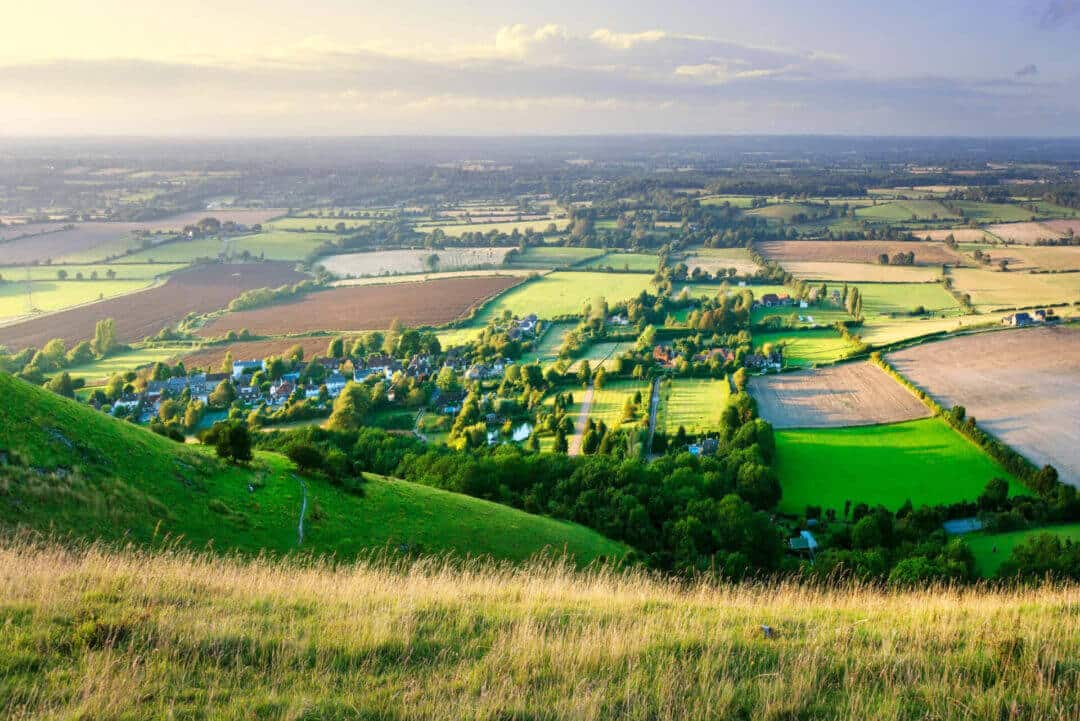
Picture a ring of land around cities where you basically can't build anything. The government set this up after World War II to stop cities from spreading everywhere. The official goals sound reasonable - stop urban sprawl, keep towns from merging, protect countryside, preserve historic areas, and push development back into cities.
It covers about 12.6% of England now. But here's what always makes me laugh - loads of this "green" belt is actually just boring farmland or scrubland. Not exactly the rolling hills people imagine.
According to the UK Government’s own definition, the Green Belt aims to:
- Prevent urban sprawl.
- Stop neighbouring towns from merging.
- Protect the countryside from encroachment.
- Preserve the setting of historic towns.
- Encourage regeneration of urban land.
Why Was the Green Belt Necessary?
After the war, cities like London were expanding like crazy. The Green Belt hit the brakes on endless suburbs. And it worked - you can still drive out of London and hit a clear boundary where the city becomes countryside.
As historian Simon Jenkins once wrote in The Guardian, “The Green Belt remains the greatest achievement of postwar planning.” His point reflects how the policy has preserved landscapes that might otherwise have disappeared under tarmac and concrete.
Relevance? It explains why, even today, many Britons are emotionally attached to the idea of a Green Belt — it feels like a national treasure rather than a bureaucratic policy.
The Housing Crisis and the Green Belt Debate
The UK desperately needs homes, Shelter says we need 90,000 new social homes yearly, but we're nowhere close. Critics blame the Green Belt for blocking development around places like London, where people actually want to live.
The London School of Economics found that just 1% of Green Belt land could fit over a million homes near transport links. Think about commuter areas in Hertfordshire or Surrey - perfect for housing, but basically off-limits.
Defenders say we should use brownfield sites first, which is fair, but doesn't solve the scale of the problem.
Economic Impact on Property Development
From a property development perspective, the Green Belt creates both constraints and opportunities.
Constraints
The Green Belt creates weird situations. It pushes up land prices inside cities because there's so little available - London residential land hit nearly £8 million per hectare in 2022. This makes affordable housing almost impossible.
Opportunities
But it also creates premium markets. Homes near Green Belt boundaries sell for 20% more because buyers want countryside access. So developers face huge constraints but also lucrative opportunities.
The Environmental Debate
Supporters talk about wildlife habitats and carbon storage, which matters with climate change. But some of this land is just intensive farming with terrible biodiversity. Meanwhile, derelict brownfield sites sit empty in cities. CPRE estimates we could build 1.3 million homes on brownfield land alone.
Political Reality
No politician wants to be known for "bulldozing the countryside." Labour backed down on reforms in 2014 after massive backlash. The Conservatives promised changes in 2020 but quietly dropped them. This leaves developers stuck and buyers frustrated while house prices keep climbing.
Case Study: London and the South East
London has some of the world's highest property prices but is surrounded by massive Green Belt areas. Researchers suggest releasing land near train stations could provide hundreds of thousands of homes without major countryside damage. But locals fear development would bring congestion and destroy community character.
Are There Alternatives?
Scholars and practitioners have suggested several middle-ground solutions:
- Targeted Green Belt Reviews: Rather than blanket protection, councils could reassess land on a case-by-case basis, distinguishing between ecological value and under-used space.
- Brownfield First Policy: Strengthening incentives for redeveloping derelict land before considering Green Belt release.
- Transit-Oriented Development: Unlocking Green Belt land near existing rail hubs could provide sustainable, car-free housing growth.
From my own perspective, the solution lies in balance. Protecting the countryside is vital, but so is ensuring future generations can afford homes. The Green Belt shouldn’t be an untouchable relic; it should evolve with society’s needs.
The Bottom-line
The Green Belt stopped urban sprawl - job done. But now it's central to our housing crisis. It pushes up prices and restricts supply, yet creates valuable markets. Environmental arguments remain strong, but so do calls for reform.
What the Green Belt really represents is Britain's struggle between preserving the past and building the future. The question isn't whether to keep it or ditch it, but how to make it work for today, not 1947.
About the Author