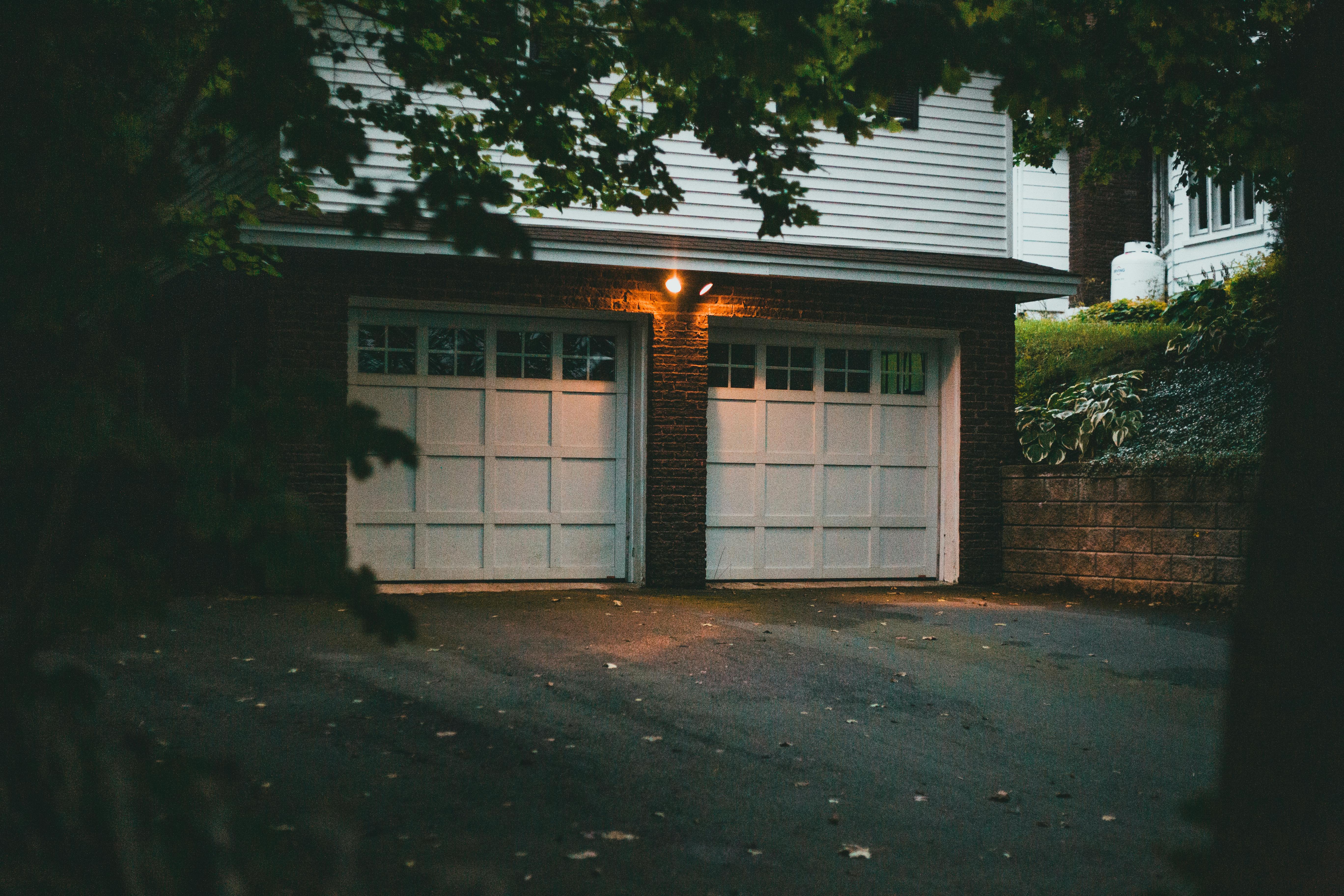
A UK home with a double garage typically costs 8–20% more than a comparable property without one, depending on region, plot size, and buyer demand. In 2025, expect prices to start around £325,000–£375,000 in parts of the North and Midlands, and exceed £900,000 in high-demand areas of the South East. Double garages are most common in detached and executive-style homes in suburban estates, village developments, and premium edge-of-town locations.
What qualifies as a double garage in the UK?
A double garage in the UK is a purpose-built structure designed to accommodate two vehicles side by side or in tandem, typically measuring between 4.8–6 metres wide and 5–6 metres deep. It may be attached, integrated into the main house, or detached within the plot boundary.
Minimum size expectations
While there is no single statutory size, most developers follow practical standards that allow two standard family vehicles to park with door clearance. A side-by-side double garage usually measures at least 5.0–5.5 metres wide. Anything narrower may function more as a large single garage.
Types of double garages
Not all double garages offer the same usability or value. Buyers should understand the structural differences:
- Integrated garage: Built into the main house footprint. Offers convenience but may reduce internal living space.
- Attached garage: Connected to the house by a wall but structurally separate.
- Detached garage: Separate structure, often at the end of a driveway. Preferred for noise isolation and conversion potential.
- Tandem garage: Two cars parked one behind the other. Technically double capacity, but less practical for daily use.
Planning and permitted development considerations
Existing double garages form part of the original planning consent. However, if a buyer intends to convert or rebuild, permitted development rights may apply subject to height limits, proximity to boundaries, and conservation area restrictions. Leasehold estates and modern developments may impose covenants restricting conversion to protect parking provision.
From a valuation standpoint, a compliant and functional double garage adds more value than a substandard structure that cannot comfortably fit two modern vehicles.
Where in the UK can you buy homes with double garages?
Homes with double garages are most widely available in suburban commuter belts, executive housing estates, and rural villages where plot sizes are larger. They are significantly less common in dense urban centres.
South East England
Counties such as Surrey, Berkshire, Buckinghamshire, and parts of Kent offer strong supply in detached family homes built from the 1990s onward. Demand is driven by higher car ownership and larger household incomes. Prices are the highest nationally, particularly within commuter range of London.
Midlands
Areas across Warwickshire, Nottinghamshire, and Staffordshire provide strong value relative to the South. New-build executive developments frequently include double garages as standard in four- and five-bedroom houses.
North of England
Yorkshire, Greater Manchester’s outer boroughs, and Cheshire offer competitive pricing. Detached properties with generous driveways and double garages are more attainable here compared to southern regions.
South West
Somerset, Devon, and Gloucestershire feature double garages commonly in village-edge and countryside developments. However, coastal demand can drive premiums in certain micro-markets.
Scotland and Wales
In Scotland, modern detached homes in commuter towns around Edinburgh and Glasgow frequently include double garages. In Wales, larger properties outside Cardiff and Swansea often provide ample plot sizes suitable for detached garage structures.
Where double garages are rare
Inner London, central Manchester, Birmingham city centre, and other high-density urban cores rarely feature double garages due to land constraints and planning density. Where available, they command significant premiums.
What do you pay for a home with a double garage?
The price of a home with a double garage depends primarily on region, property type, and land value. On average, buyers pay a premium of 8–20% compared to similar homes with single garages or driveways only.
| Region | Approximate Entry Price | Upper Market Range |
|---|---|---|
| North East / Yorkshire | £325,000 | £650,000+ |
| Midlands | £375,000 | £750,000+ |
| North West / Cheshire | £400,000 | £900,000+ |
| South West | £450,000 | £950,000+ |
| South East | £650,000 | £1.5m+ |
Why buyers pay more
The premium reflects land value, build cost, and lifestyle utility. A double garage provides:
- Secure parking for two vehicles
- Additional storage space
- Workshop or hobby potential
- Future conversion flexibility (subject to consent)
- Stronger resale appeal in family markets
Does a double garage always add value?
In suburban and rural family markets, yes — particularly for four-bedroom detached homes. However, in compact starter-home markets, buyers may prioritise internal living space over garage capacity. A poorly proportioned garage or one converted without approval can reduce perceived value.
Valuers typically assess garages as part of overall gross internal area only if integrated and compliant. Detached garages are considered separately but still influence comparable evidence.
Is it cheaper to build a double garage or buy a home with one?
In most established markets, buying a home that already has a double garage is more cost-effective than building one from scratch — particularly in higher-value regions where construction costs and planning risk are significant.
Typical build costs in 2025
The cost to construct a new double garage depends on materials, access, and whether groundwork is required. As a general guide:
| Type | Estimated Cost Range |
|---|---|
| Basic brick-built detached | £22,000 – £35,000 |
| High-spec brick with pitched roof | £35,000 – £55,000+ |
| Timber frame structure | £18,000 – £30,000 |
| With electrics, insulation, EV charging | Add £3,000 – £8,000 |
These figures exclude planning application fees, structural engineer input (if required), drainage adjustments, and potential driveway modifications.
When building makes financial sense
- The property sits on a large plot with clear side access.
- Comparable homes with double garages command significantly higher resale values.
- You intend long-term ownership and lifestyle use.
When buying is the safer route
- Land values are high (South East, commuter zones).
- Estate covenants restrict additional structures.
- Access for construction is limited.
From an investment perspective, retrofitting a garage rarely produces a pound-for-pound return equal to its construction cost unless the local market strongly expects double parking provision.
What are the ongoing costs of owning a double garage?
Annual running costs are relatively modest but should not be ignored, especially for detached structures exposed to weather.
Typical annual expenses
- Insurance impact: Usually minimal increase if declared correctly.
- Maintenance: £300–£800 annually for roof repairs, door servicing, and minor structural upkeep.
- Electricity usage: Variable if used as workshop or EV charging space.
- Security upgrades: Alarm systems or reinforced doors if storing high-value vehicles.
Garage doors — particularly electric roller systems — often require servicing every 12–24 months. Replacement of motor systems can cost £500–£1,500 depending on specification.
Impact on council tax
An existing garage included within the original property assessment typically does not trigger a separate council tax charge. However, significant structural additions may be reviewed upon sale or major renovation.
What legal checks should buyers carry out?
Buyers should confirm that the double garage is legally compliant, structurally sound, and free from covenant restrictions before exchange of contracts.
Key due diligence steps
- Title plan verification: Ensure the garage sits within the registered boundary.
- Planning history: Confirm original approval or permitted development compliance.
- Building regulations sign-off: Required for structural builds with foundations and electrics.
- Estate covenants: Modern developments may prohibit conversion or business use.
- Access rights: Particularly relevant for shared driveways.
Surveyors should inspect roof condition, damp penetration, slab cracking, and door alignment. Detached garages without adequate foundations can suffer settlement issues over time.
What mistakes do buyers make with double garages?
The most common mistake is assuming all double garages provide equal usability and value. Practical functionality matters more than label.
Frequent buyer errors
- Not measuring internal width and depth.
- Overlooking narrow door openings.
- Ignoring turning radius and driveway slope.
- Assuming easy conversion without planning review.
- Underestimating maintenance of detached structures.
Another frequent oversight is resale positioning. In some entry-level markets, internal living space holds stronger demand than oversized garages. Buyers focused purely on storage may limit their future buyer pool.
Professionally, double garages perform best in family-oriented suburban markets where two-car households are standard and plot size expectations support the feature.
Are homes with double garages a good investment?
In most suburban and rural UK markets, homes with double garages demonstrate stronger resale resilience than comparable properties without secure multi-vehicle parking. They appeal to family buyers, two-car households, and lifestyle purchasers seeking storage flexibility.
Capital growth considerations
Double garages contribute most value where:
- Household car ownership exceeds one vehicle per property.
- Street parking is limited or restricted.
- Weather exposure increases demand for covered parking.
- The property sits within an executive or detached housing segment.
In commuter-belt towns and premium village markets, double garages can protect value during slower market cycles. Buyers in these areas often expect them as standard in four- and five-bedroom homes.
Rental market impact
For landlords, a double garage rarely increases rent proportionally to its capital value unless the tenant profile includes professionals with multiple vehicles or storage needs. However, it can reduce void periods in competitive suburban markets by widening tenant appeal.
Market risk factors
In high-density urban locations, land value often outweighs garage utility. In such cases, internal living accommodation may outperform garage space in buyer preference. Investment performance therefore depends on matching the feature to the correct local demand profile.
Can you convert a double garage into living space?
Yes, many double garages can be converted into habitable rooms, subject to planning rules, building regulations, and estate covenants. Conversion viability depends on structural integrity, insulation potential, and parking policy constraints.
Planning position
In England, garage conversions often fall under permitted development if the external structure remains largely unchanged. However:
- New-build estates may restrict removal of parking provision.
- Conservation areas may require formal consent.
- Listed properties require listed building consent.
Typical conversion costs
| Specification Level | Estimated Cost Range |
|---|---|
| Basic insulated room | £15,000 – £25,000 |
| High-spec with plumbing | £25,000 – £45,000+ |
| Structural alterations required | Add £5,000 – £15,000 |
Conversions must comply with building regulations covering insulation, fire safety, ventilation, damp proofing, and structural loading. Mortgage lenders may request evidence of compliance during resale.
Does conversion increase value?
Conversion can increase value where additional internal living space is more desirable than parking capacity. However, in car-dependent suburban markets, removing a double garage may reduce buyer appeal. The decision should reflect local comparable sales evidence.
How should sellers position a home with a double garage?
Sellers should present a double garage as a practical asset rather than simply a storage area. Buyers respond to measurable benefits: secure parking, workshop use, EV charging readiness, and future flexibility.
Presentation best practice
- Declutter to demonstrate true parking capacity.
- Provide internal measurements in marketing materials.
- Highlight power supply, lighting, and EV infrastructure.
- Clarify planning compliance and building regulation approval.
Professional photography should show driveway access and vehicle clearance to reinforce functionality. Where relevant, include floor plan labelling that clearly identifies the garage footprint.
In executive family markets, the double garage should be positioned alongside plot size, number of bedrooms, and energy efficiency as part of a cohesive value proposition.
Frequently Asked Questions
Do double garages increase property value in the UK?
Yes, particularly in suburban and rural markets. A double garage can add 8–20% in value compared to similar properties without one, depending on location and buyer demand.
Are double garages common in new-build homes?
They are common in four- and five-bedroom detached new-build homes, especially in executive-style developments. They are less common in starter homes or high-density urban schemes.
Can I convert my double garage without planning permission?
Often yes under permitted development, provided external alterations are minimal and no estate restrictions apply. Building regulations approval is still required.
Is a detached or integrated double garage better?
Detached garages offer better noise isolation and conversion flexibility. Integrated garages provide convenience but reduce internal layout options.
Does removing a double garage reduce resale appeal?
It can in car-dependent suburban areas where buyers expect multi-vehicle parking. Market evidence should guide any decision to convert.
Key Takeaways
- Regional Pricing: Entry-level detached homes with double garages start around £325,000 in northern regions and exceed £650,000 in the South East.
- Value Premium: Buyers typically pay 8–20% more for properties with double garages in family-oriented markets.
- Build vs Buy: Constructing a new double garage can cost £22,000–£55,000+, often making pre-existing garages more cost-efficient.
- Legal Checks Matter: Title boundaries, planning history, and building regulation compliance must be verified.
- Conversion Decisions: Converting may add value in some markets but reduce appeal in others.
References
- UK Building Regulations Approved Documents (current edition).
- HM Land Registry Price Paid Data.
- Office for National Statistics – Housing Market Indicators.
- Royal Institution of Chartered Surveyors (RICS) Residential Market Surveys.