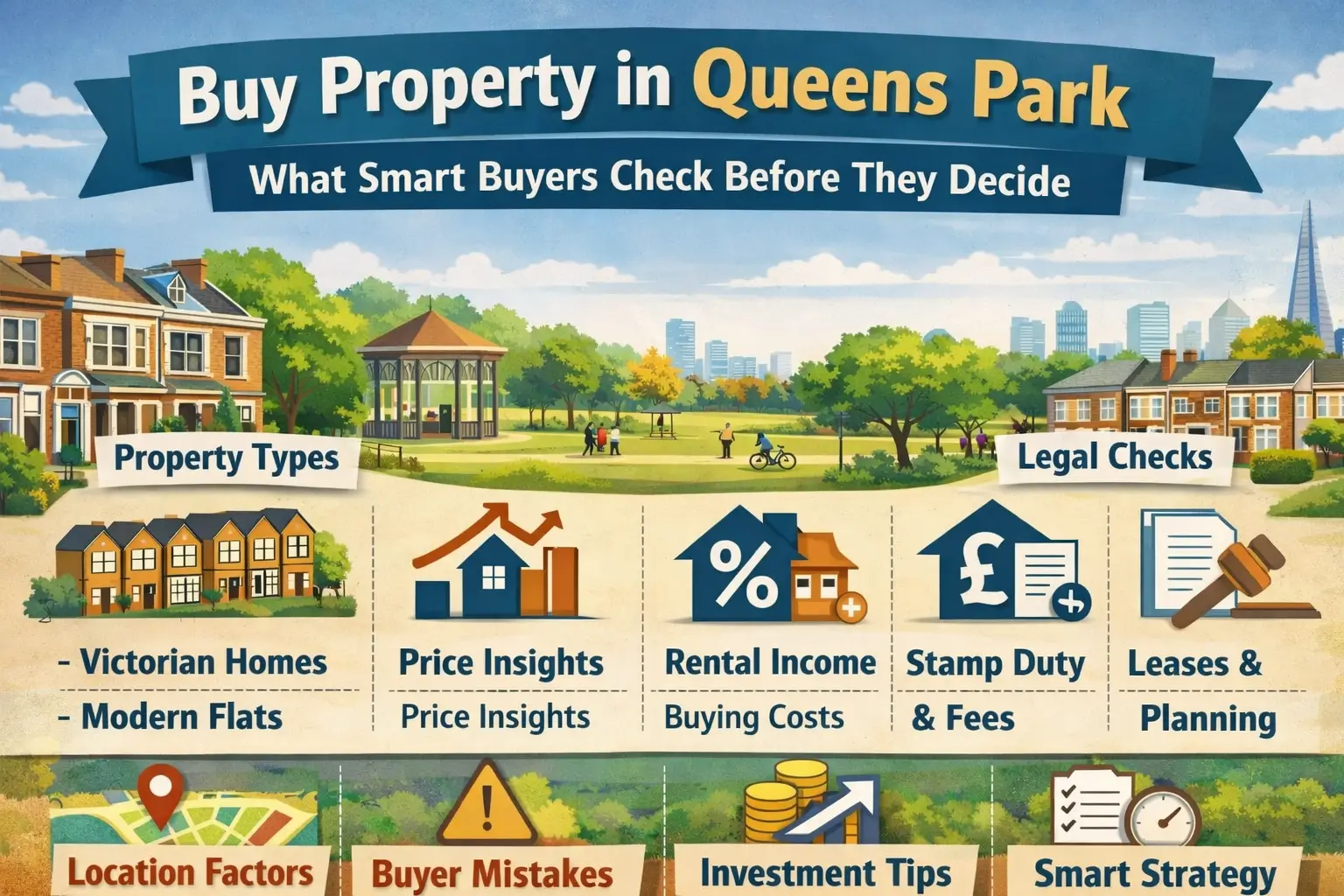
Buying property in Queens Park makes sense when you understand pricing trends, housing stock, transport access, and long-term liveability. Smart buyers check data before emotion. They assess value drivers, risks, and future demand to avoid overpaying and to secure stable returns.
Where Queens Park Sits in the London Property Market
Queens Park is a residential area in northwest London that spans Brent and Westminster. Buyers choose it for balanced pricing, strong transport links, and a stable owner-occupier base. It attracts professionals, young families, and long-term landlords rather than short-term speculation.
The area benefits from Bakerloo Line and London Overground services. This keeps commute times competitive compared to inner zones. Buyers often compare Queens Park with Kilburn, Kensal Rise, and Maida Vale. Queens Park usually offers better value per square foot than Maida Vale while retaining similar amenities.
Smart buyers view Queens Park as a low-volatility market. Prices rise steadily rather than sharply. This reduces downside risk during market corrections. It suits buyers who want predictable capital growth and consistent rental demand.
What Types of Property Are Available in Queens Park
Queens Park offers a clear mix of period housing and purpose-built apartments. Victorian and Edwardian terraces dominate the streets closest to the park. These homes attract families looking for space and long-term stability.
Mansion blocks and low-rise flats are common along main roads and near stations. These appeal to first-time buyers and investors. New build supply is limited. This supports price resilience but reduces choice for buyers seeking modern layouts.
Smart buyers check lease length, service charges, and building maintenance history. Many flats sit in older blocks. Running costs vary widely. A low purchase price can hide long term expense.
How Property Prices Behave in Queens Park
Property prices in Queens Park reflect stable demand rather than hype cycles. Houses command a premium due to limited supply. Flats show more negotiation room, especially in buildings with high service charges.
Buyers who succeed track price per square foot by street, not postcode averages. Proximity to the park, station distance, and school catchments create sharp micro differences. Two similar homes can vary significantly in value within a short walk.
Smart buyers also watch transaction volume. When listings rise, but sales slow, leverage improves. Queens Park often rewards patience more than speed. Rushed decisions usually lead to overpayment.
Who Buys Property in Queens Park and Why It Matters
Queens Park attracts owner-occupiers first and investors second. This shapes pricing behaviour and resale stability. Areas dominated by homeowners show slower downturns and faster recovery.
Typical buyers include dual-income professionals working in Zone 1 or Zone 2, families upgrading from flats, and landlords focused on long-term tenants. Short-term let investors play a minor role due to planning controls and tenant preferences.
Smart buyers analyse who competes for the same property. If demand comes mainly from families, house prices stay firm even when mortgage rates rise. If demand comes from investors only, prices react faster to policy changes.
Rental Demand and Yield Reality in Queens Park
Rental demand in Queens Park remains consistent due to transport access and limited supply. Tenants value stability, green space, and schools over nightlife or short commutes.
Gross rental yields are moderate rather than high. Investors prioritise tenant retention and low void periods. This suits landlords seeking predictable income instead of aggressive yield chasing.
| Property Type | Yield Range | Tenant Profile |
|---|---|---|
| One bedroom flat | 3.5 to 4.2 percent | Professionals, couples |
| Two bedroom flat | 3.2 to 3.8 percent | Sharers, small families |
| Terraced house | 2.8 to 3.4 percent | Families, long term renters |
Smart investors stress test rental income against interest rate changes, not headline yields. Queens Park performs best under conservative assumptions.
True Cost of Buying Property in Queens Park
Purchase price alone does not reflect total ownership cost. Buyers in Queens Park face layered expenses that affect affordability and returns.
Common costs include stamp duty, legal fees, surveys, and mortgage charges. Flats add service charges and sinking funds. Older buildings may require higher maintenance contributions.
| Cost Item | Typical Range | Buyer Impact |
|---|---|---|
| Stamp duty | Variable by price band | Immediate cash outlay |
| Legal and conveyancing | 1,500 to 3,000 GBP | Transaction completion |
| Service charges | 2,000 to 5,000 GBP annually | Ongoing ownership cost |
| Maintenance allowance | 1 percent of value yearly | Long term property condition |
Smart buyers request three years of service charge accounts and planned works schedules before committing.
Local Legal and Planning Factors Buyers Check
Queens Park includes conservation areas with planning restrictions. Buyers must verify what alterations are permitted before assuming future flexibility.
Leasehold properties require a close review of the remaining term and the freeholder's reputation. Short leases reduce mortgage options and resale value.
Smart buyers also confirm borough boundaries. Council tax rates, parking permits, and licensing rules differ between Brent and Westminster. These details affect long-term cost and usability.
When Is the Right Time to Buy in Queens Park
The best time to buy in Queens Park depends on negotiation conditions rather than the season alone. Supply usually rises in spring and early autumn. Competition increases during these periods.
Smart buyers track price reductions and time on market. Listings that sit unsold for eight to twelve weeks often indicate motivated sellers. This creates room for realistic offers.
Interest rate stability matters more than rate cuts. Buyers who secure finance certainty before viewing move faster when value appears. This approach reduces emotional bidding.
Common Mistakes Buyers Make in Queens Park
Many buyers overpay for proximity to the park without assessing street noise, foot traffic, or building condition. Location adds value only when daily liveability remains high.
Another mistake involves ignoring long-term costs. Service charges, future roof works, and inefficient heating systems reduce affordability over time.
Smart buyers avoid stretching budgets based on expected appreciation. Queens Park rewards disciplined purchasing, not speculation.
Frequently Asked Questions
Is Queens Park a good area for first-time buyers?
Yes. Queens Park offers stable pricing, strong transport links, and a diverse housing stock. Flats provide an accessible entry point compared to nearby prime areas.
How long does it take to buy property in Queens Park?
The process typically takes eight to twelve weeks from offer acceptance. Leasehold properties may take longer due to management information delays.
Are property prices in Queens Park rising?
Prices show steady long-term growth rather than rapid spikes. Demand remains consistent due to owner-occupier appeal and limited new supply.
Is Queens Park better for living or investment?
Queens Park suits buyers who value liveability and income stability. It favors long term ownership more than short-term trading.
Key Takeaways
- Market position: Queens Park sits between prime and emerging areas with balanced risk.
- Property mix: Period homes dominate, with limited new build supply.
- Buyer profile: Owner occupiers shape price stability and resale demand.
- Costs: Service charges and maintenance require close review.
- Strategy: Patience and data driven offers protect value.
References
- UK Land Registry residential price data
- Transport for London connectivity reports
- Local authority planning guidance for Brent and Westminster
- ONS housing market statistics