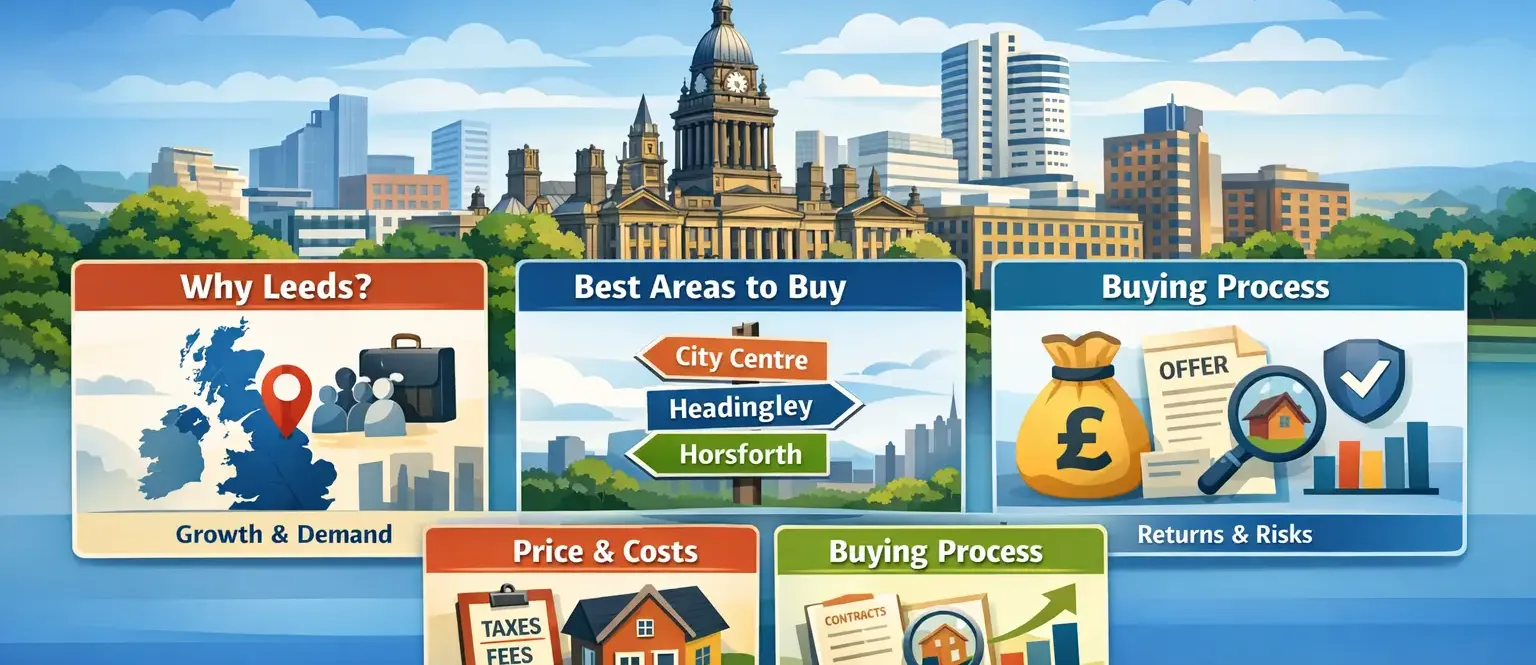
Buying property in Leeds means entering one of the UK’s most active regional property markets, with strong demand from homeowners, students, and investors. Leeds offers a mix of affordable entry prices, consistent rental demand, and long-term economic growth driven by finance, healthcare, education, and digital industries. This guide explains where to buy, who the market suits, and how to make informed decisions based on data, local dynamics, and buyer intent.
Why Buy Property in Leeds
Leeds is one of the UK’s strongest regional property markets because it combines population growth, job creation, and relative affordability. Average property prices in Leeds remain below those in London, Manchester, and Birmingham, while rental demand stays high across most districts.
Leeds has a population of over 800,000 and supports more than 100,000 students across several universities. This creates year-round housing demand across rental and owner-occupier segments. The city also hosts major employers in banking, legal services, NHS administration, and digital technology, which supports long-term housing stability.
From an investment perspective, Leeds offers yields that often exceed those in southern cities. Rental demand comes from professionals, students, and families. From a homeowner's perspective, buyers gain access to diverse neighbourhoods, strong transport links, and ongoing regeneration projects.
Leeds is well connected by rail to London in just over two hours and benefits from access to the M1 and M62 motorways. Leeds Bradford Airport supports domestic and European travel. These factors increase appeal for both residents and employers.
Property Types and Buyer Profiles
The Leeds property market supports a wide range of buyer types. Each segment aligns with different locations, budgets, and risk profiles.
First time buyers often target terraced houses and modern apartments in areas such as Armley, Beeston, and parts of East Leeds. These locations offer lower entry prices while remaining within commuting distance of the city centre.
Home movers and families typically focus on semi-detached and detached homes in suburbs with strong schools and green space. Areas like Horsforth, Roundhay, and Morley attract buyers seeking long-term stability and lifestyle benefits.
Buy-to-let investors usually prioritise proximity to universities, hospitals, and transport hubs. Students live in clusters around Headingley, Hyde Park, and Woodhouse. Professional rentals perform well in the city centre and along key commuter corridors.
New build developments appeal to buyers who value modern specifications, energy efficiency, and lower maintenance. These are common in South Bank, Holbeck, and the city centre regeneration zones.
Understanding your buyer profile helps narrow location choice, property type, and expected returns. Leeds supports all major buyer journeys, but outcomes depend on alignment between budget, goals, and local demand.
Best Areas to Buy Property in Leeds
Leeds does not have a single dominant location. Instead, value and suitability vary by buyer goal. Area selection has a direct impact on price growth, rental demand, and resale liquidity.
Leeds City Centre suits professionals and investors seeking apartments with strong rental demand. Prices are higher per square foot, but vacancy rates are low due to employment density and transport access.
Headingley and Hyde Park remain core student markets. Properties here deliver consistent rental income, but licensing requirements and maintenance costs must be factored into decisions.
Horsforth and Roundhay appeal to families and long-term homeowners. These areas command higher prices due to school quality, parks, and community amenities. Capital growth tends to be steadier than speculative growth.
South Leeds and East Leeds offer lower entry prices and regeneration-driven potential. Areas such as Holbeck and Cross Green benefit from infrastructure investment, but buyers should assess timelines and local demand carefully.
Choosing the right area in Leeds requires matching budget, holding period, and risk tolerance with local fundamentals. Price alone should not drive decisions.
Leeds Property Prices and Market Trends
Property prices in Leeds have grown steadily over the past decade, supported by population growth and regional investment. Average prices remain accessible compared to other major UK cities, which sustains buyer demand across cycles.
House prices vary widely by location and property type. City centre apartments command higher prices per square foot. Suburban family homes show stronger long-term value retention. Entry-level terraces in outer districts remain the most affordable option.
| Property Type | Price Range | Buyer Profile |
|---|---|---|
| City Centre Apartment | £180,000 to £300,000 | Professionals, Investors |
| Terraced House | £130,000 to £220,000 | First Time Buyers |
| Semi Detached House | £220,000 to £350,000 | Families |
| Detached House | £350,000+ | Long Term Homeowners |
Leeds benefits from ongoing regeneration in areas such as South Bank, which influences future pricing. Buyers should track planning approvals, transport projects, and employment expansion when assessing growth potential.
Step by Step Process to Buy Property in Leeds
Buying property in Leeds follows the standard England and Wales process. Preparation reduces delays and financial risk.
The process begins with securing a mortgage agreement in principle. This defines your budget and strengthens your offer position. Buyers then shortlist areas and property types based on affordability and objectives.
Once an offer is accepted, a solicitor conducts searches covering local authority data, drainage, environmental risks, and land registry records. A survey assesses the condition of the property and identifies structural issues.
After contracts are exchanged, the transaction becomes legally binding. Completion typically follows within one to two weeks. Ownership transfers when funds clear and keys are released.
| Stage | Estimated Timeframe |
|---|---|
| Mortgage Approval | 1 to 3 weeks |
| Offer to Exchange | 6 to 10 weeks |
| Exchange to Completion | 1 to 2 weeks |
Delays often arise from incomplete paperwork, survey renegotiations, or chain dependencies. Early preparation reduces these risks.
Costs and Fees to Consider When Buying in Leeds
The purchase price is only one component of total cost. Buyers must account for taxes, professional fees, and ongoing expenses.
Stamp Duty Land Tax applies based on purchase price and buyer status. First-time buyers benefit from relief thresholds. Legal fees, surveys, and mortgage arrangement charges add to upfront costs.
Investors should budget for licensing, safety compliance, insurance, and potential refurbishment. Leasehold properties may involve service charges and ground rent, which affect long-term affordability.
| Cost Type | Typical Range |
|---|---|
| Stamp Duty | Variable |
| Solicitor Fees | £800 to £1,500 |
| Survey | £400 to £1,200 |
| Mortgage Fees | £0 to £2,000 |
Understanding full costs improves budgeting accuracy and prevents deal failure late in the process.
Common Mistakes Buyers Make in Leeds
Many buyers focus solely on price and overlook local dynamics. This leads to mismatched expectations and weaker outcomes.
Ignoring rental demand patterns affects investors. Overestimating price growth increases risk. Skipping surveys often results in unexpected repair costs.
Leasehold terms, licensing rules for HMOs, and flood risk zones require careful review. Buyers who rely on assumptions instead of verified data face higher long-term costs.
Successful buyers validate demand, confirm legal status, and align property choice with realistic timelines.
Rental Demand and Investment Returns in Leeds
Leeds delivers consistent rental demand because it supports multiple tenant groups at scale. Students, healthcare workers, finance professionals, and young families all compete for housing across different districts.
City centre apartments attract professionals who prioritise proximity to offices and transport. Average void periods are short when pricing aligns with local income levels. Suburban houses perform well for families who value schools and space.
Student demand concentrates around universities in Headingley, Hyde Park, and Woodhouse. Properties here often achieve higher yields, but management intensity and compliance obligations are higher.
Long-term returns depend on purchase price discipline, maintenance planning, and tenant fit. Investors who match property type to tenant demand achieve more stable income and lower turnover.
Legal and Regulatory Considerations
Property purchases in Leeds follow national regulations, but local rules affect certain property types. Buyers must verify legal status before committing.
HMOs require licensing from Leeds City Council. Safety certificates for gas, electricity, and fire protection are mandatory. Failure to comply can result in fines and restrictions.
Leasehold buyers should review remaining lease length, service charges, and ground rent clauses. Short leases and escalating charges reduce mortgage eligibility and resale value.
Flood risk exists in some areas near waterways. Solicitors flag this through searches, but buyers should assess insurance availability and premiums independently.
A Practical Decision Framework for Buyers
Smart property decisions in Leeds follow a structured evaluation. Buyers should assess affordability, demand, and exit options before making offers.
Start by defining your primary goal. Home ownership, income generation, or capital growth require different locations and property types.
Validate demand using comparable sales and rental listings. Confirm total costs, including taxes and maintenance. Review legal status and local planning context.
Only proceed when the property aligns with your timeline and risk tolerance. Discipline matters more than speed.
Frequently Asked Questions
Is Leeds a good place to buy property?
Yes. Leeds combines strong employment, population
growth, and relative affordability, which supports long-term housing demand.
What is the best area to buy property in Leeds?
The best area depends on your goal. City
centre suits professionals and investors. Headingley suits student lets. Horsforth and Roundhay suit
families.
Are property prices in Leeds still affordable?
Prices remain lower than in many UK
cities of similar size. Entry-level options exist in several districts, though competition is strong.
Do I need a survey when buying property in Leeds?
Yes. Surveys identify structural
issues and protect buyers from unexpected repair costs.
Is buy to let profitable in Leeds?
It can be. Profitability depends on purchase price,
rental demand, compliance costs, and management quality.
Key Takeaways
- Market strength: Leeds benefits from diverse employment and steady housing demand.
- Area choice: Location selection should match buyer goals and tenant profiles.
- Cost awareness: Total costs matter more than headline price.
- Compliance: Legal checks and licensing rules affect outcomes.
- Discipline: Data driven decisions reduce risk.
References
- UK Land Registry Price Paid Data
- Office for National Statistics Housing Data
- Leeds City Council Housing and Licensing Guidance
- UK Government Stamp Duty Land Tax Guidance