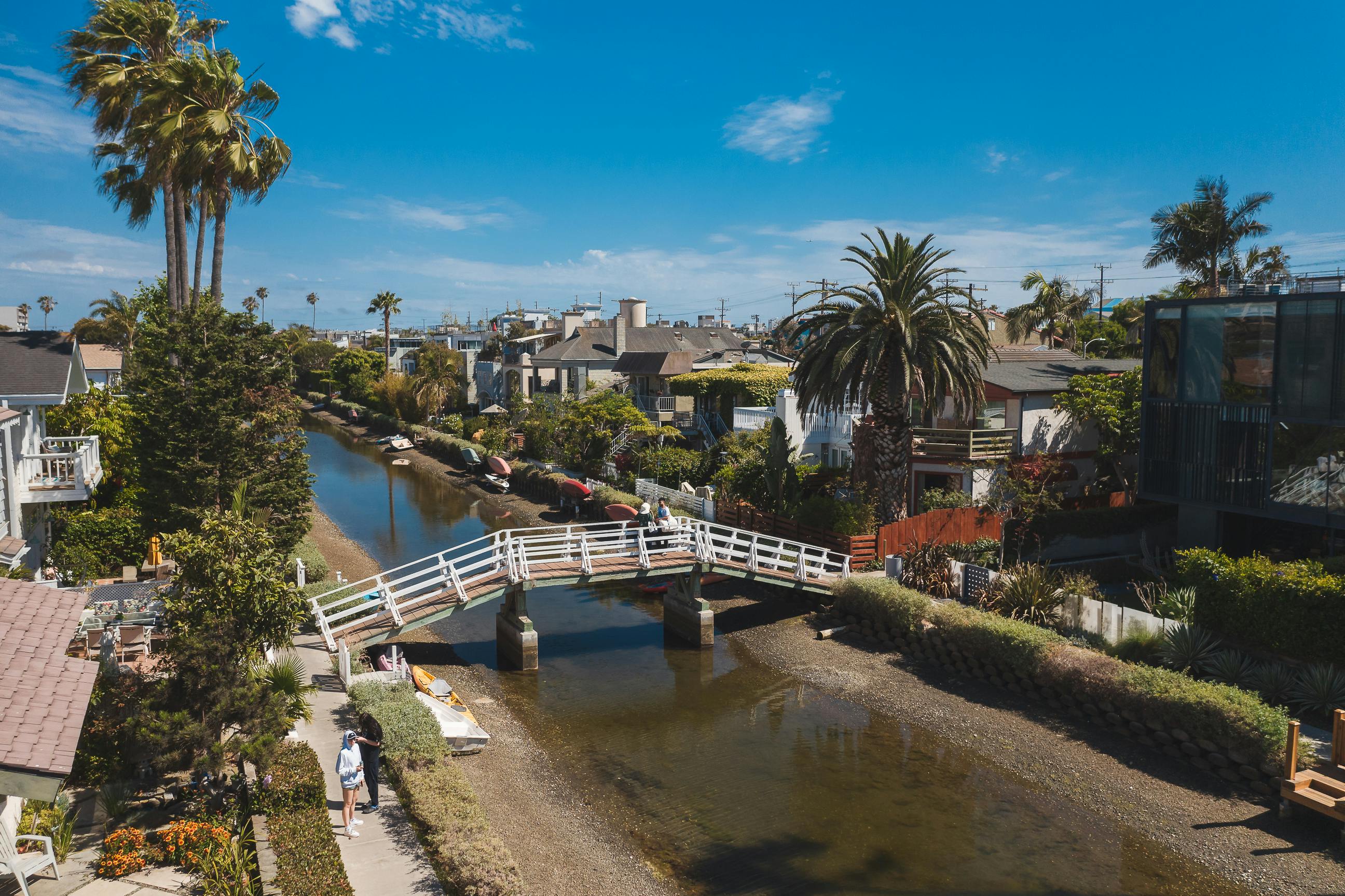
The best up-and-coming neighbourhoods in Los Angeles are areas showing measurable improvement in home values, rental demand, infrastructure investment, and local amenities—without having already priced out future growth. These neighbourhoods typically sit just outside established prime areas, benefit from transit expansion or rezoning, and attract a growing mix of first-time buyers, renters, and long-term investors.
What makes a neighbourhood “up-and-coming” in Los Angeles
In Los Angeles, an up-and-coming neighbourhood is defined by structural change rather than hype. These areas show early but consistent signals of improvement, including rising transaction volume, gradual price appreciation, increased rental absorption, and visible public or private investment. Crucially, prices remain below nearby established neighbourhoods, leaving room for future upside.
Transit access is one of the strongest indicators. Neighbourhoods near new or expanded Metro lines, bus rapid transit corridors, or major freeway improvements often experience increased buyer interest and higher long-term demand. In Los Angeles, where commute times directly influence housing choices, improved connectivity can materially change a neighbourhood’s desirability.
Zoning and land-use changes also play a central role. Areas affected by upzoning, transit-oriented development incentives, or mixed-use allowances tend to attract new residential projects and retail activity. This is particularly relevant in Los Angeles, where housing supply constraints have historically limited development in high-demand zones.
Demographic shifts are another key signal. An influx of younger professionals, creative workers, or small families often precedes visible neighbourhood change. This shift is usually reflected in new cafés, local services, co-working spaces, and small-scale renovations rather than large, master-planned developments.
How to evaluate emerging areas as a buyer or investor
Evaluating an up-and-coming neighbourhood in Los Angeles requires separating long-term fundamentals from short-term trends. The most reliable approach combines data analysis with on-the-ground observation and an understanding of local planning policy.
Price trends should be assessed relative to adjacent neighbourhoods rather than citywide averages. A moderate increase in a historically undervalued area can be more meaningful than rapid growth in an already expensive market. Consistent sales activity, narrowing price gaps, and reduced days on market often indicate improving confidence.
Rental performance is equally important, even for owner-occupiers. Areas with growing renter demand, stable vacancy rates, and rising rents tend to attract investors, which in turn supports transaction liquidity. In Los Angeles, proximity to employment hubs, studios, hospitals, and universities strongly influences rental resilience.
Buyers and investors should also review planned infrastructure and municipal investment. Approved projects—such as street improvements, transit stations, or public facilities—carry more weight than speculative proposals. Publicly funded projects often signal long-term commitment that private investment follows.
Los Angeles market context shaping growth areas
Los Angeles is a polycentric housing market, meaning growth does not radiate from a single city centre. Instead, neighbourhoods evolve based on proximity to multiple employment nodes, transport corridors, and lifestyle clusters. This structure creates multiple “next” neighbourhoods rather than one uniform pattern of gentrification.
Housing affordability pressures have pushed buyers and renters outward from traditionally expensive areas such as West Los Angeles, Santa Monica, and Silver Lake. As a result, nearby neighbourhoods with similar access but lower entry prices are absorbing displaced demand. This spillover effect is a recurring driver of neighbourhood transformation.
State-level housing policies have also altered the landscape. Measures encouraging higher-density housing, accessory dwelling units, and transit-oriented development have made previously overlooked areas more attractive for redevelopment. These policy shifts tend to benefit neighbourhoods with underutilised land and existing transport links.
Understanding this broader context is essential before identifying specific neighbourhoods. Up-and-coming areas do not emerge in isolation; they reflect structural changes in how and where Los Angeles residents live, work, and commute.
West Adams
West Adams is one of the clearest examples of an up-and-coming neighbourhood in Los Angeles, driven by proximity to Culver City, Downtown Los Angeles, and the Expo Line. The area has seen steady home price appreciation while remaining more accessible than neighbouring Mid-City and Culver City districts.
The neighbourhood benefits from strong transit connectivity, including multiple Expo Line stations, which significantly reduce commute times to major employment hubs. This has attracted both owner-occupiers priced out of Westside markets and investors targeting long-term rental demand.
Housing stock in West Adams is varied, ranging from historic single-family homes to small multifamily properties. This diversity supports a broad buyer base but also requires careful due diligence, particularly around renovation quality and historic preservation restrictions.
Leimert Park
Leimert Park is an emerging neighbourhood characterised by cultural significance and improving accessibility. Long recognised as a cultural hub, the area has gained renewed attention following the opening of nearby Metro rail connections and increased residential investment.
The neighbourhood’s appeal lies in its relatively central location and strong sense of community. Prices remain lower than adjacent areas such as Baldwin Hills, creating a pricing gap that continues to narrow as demand increases.
From an investment perspective, Leimert Park offers stable rental demand, particularly for small households and creatives. Buyers should, however, factor in zoning rules and community oversight, which can affect redevelopment timelines.
Highland Park adjacent areas
While Highland Park itself is now well established, surrounding pockets continue to show up-and-coming characteristics. Areas bordering Cypress Park and Glassell Park are benefiting from spillover demand as prices in Highland Park rise.
These neighbourhoods share access to the Metro Gold Line and major road connections, making them attractive to commuters working in Pasadena, Downtown Los Angeles, and the San Gabriel Valley.
Buyers in these adjacent areas often find better value relative to core Highland Park, though property condition can vary significantly. Older housing stock may require upgrades, which should be reflected in purchase pricing and renovation budgets.
North Hollywood (NoHo East)
North Hollywood’s eastern sections, often referred to as NoHo East, are gaining traction due to infrastructure investment and proximity to the NoHo Arts District. Compared with established Studio City and Toluca Lake, entry prices remain relatively moderate.
The area benefits from access to multiple Metro lines and a growing base of entertainment and media-related employment. This supports consistent rental demand, particularly for apartments and townhomes.
Development activity is more pronounced here than in some other emerging neighbourhoods, which can support long-term value but may also introduce short-term construction disruption. Buyers should evaluate specific micro-locations rather than assuming uniform conditions across North Hollywood.
Boyle Heights
Boyle Heights remains one of the most discussed up-and-coming neighbourhoods in Los Angeles due to its proximity to Downtown and strong transit access. Multiple Metro lines serve the area, positioning it well for commuters.
The neighbourhood has experienced gradual appreciation, though growth has been more measured compared to some Westside-adjacent areas. Community sentiment and local policy play a significant role in shaping development outcomes, making local knowledge especially important.
For buyers and investors, Boyle Heights offers long-term potential rather than rapid turnover opportunities. Understanding local regulations and engaging with experienced professionals is essential when entering this market.
Comparison of up-and-coming LA neighbourhoods
| Neighbourhood | Primary growth driver | Buyer profile | Risk considerations |
|---|---|---|---|
| West Adams | Transit access, proximity to Westside | First-time buyers, long-term investors | Historic restrictions, renovation costs |
| Leimert Park | Cultural hub, rail connectivity | Owner-occupiers, rental investors | Zoning limits, community oversight |
| Highland Park adjacents | Spillover demand | Value-focused buyers | Variable property condition |
| NoHo East | Employment growth, transit | Rent-focused investors | Construction and density changes |
| Boyle Heights | Downtown proximity | Long-term holders | Policy and community dynamics |
Common buyer and investor mistakes
A frequent mistake is assuming that all nearby neighbourhoods will appreciate at the same pace. In Los Angeles, micro-location differences—such as school zones, street conditions, and zoning—can lead to materially different outcomes within short distances.
Another common error is underestimating regulatory complexity. Rent control rules, historic preservation overlays, and development restrictions can affect both cash flow and exit strategies.
Buyers also sometimes focus exclusively on projected appreciation while ignoring livability factors. Neighbourhoods that improve gradually and sustainably tend to outperform those driven by short-term speculation.
Long-term outlook for emerging LA neighbourhoods
The long-term outlook for up-and-coming neighbourhoods in Los Angeles depends primarily on sustained housing demand, infrastructure delivery, and policy consistency rather than short-term price cycles. Areas that continue to attract residents due to accessibility, employment proximity, and livability tend to show steadier appreciation over time.
Los Angeles faces ongoing housing supply constraints, which place structural upward pressure on well-located residential areas. Neighbourhoods that can absorb additional density through zoning allowances or transit-oriented development are positioned to benefit from this imbalance, provided new supply aligns with local demand.
That said, growth is unlikely to be uniform. Some neighbourhoods will mature into established markets, while others may plateau if infrastructure investment stalls or affordability erodes demand. Long-term performance is therefore more closely tied to fundamentals than to past appreciation alone.
Which neighbourhoods suit different buyer types
Different up-and-coming neighbourhoods in Los Angeles suit different buyer profiles, depending on risk tolerance, time horizon, and intended use. Matching the neighbourhood to the buyer’s objectives is often more important than selecting the “hottest” area.
First-time buyers often prioritise relative affordability and commute access. Areas such as West Adams or parts of North Hollywood can offer entry points with improving amenities and strong transport links, reducing long-term reliance on cars.
Long-term investors typically focus on rental stability and policy risk. Neighbourhoods with diversified tenant demand—close to employment centres, healthcare facilities, or educational institutions—tend to offer more predictable income than those reliant on a single industry.
Owner-occupiers seeking lifestyle improvements may prefer neighbourhoods where change is gradual rather than disruptive. Cultural continuity, local businesses, and community engagement often correlate with steadier neighbourhood evolution.
Risks to understand before buying in up-and-coming areas
Buying in an emerging neighbourhood carries specific risks that differ from established markets. The most common risk is overestimating the speed of change. Neighbourhood improvement often takes longer than expected, which can affect short-term resale or rental assumptions.
Regulatory risk is also significant in Los Angeles. Rent stabilisation ordinances, historic preservation zones, and community plan updates can materially affect redevelopment options and future cash flow. Buyers should review applicable overlays and local regulations before committing.
Finally, property-level risk should not be overlooked. Older housing stock, common in emerging neighbourhoods, may require substantial maintenance or upgrades. These costs should be assessed realistically rather than deferred in financial planning.
Frequently Asked Questions
What defines an up-and-coming neighbourhood in Los Angeles?
An up-and-coming neighbourhood shows early signs of improvement, such as rising demand, infrastructure investment, and increasing amenities, while still offering lower entry prices than nearby established areas.
Are up-and-coming neighbourhoods in Los Angeles a good investment?
They can be, particularly for buyers with a medium- to long-term horizon. Outcomes depend on location fundamentals, regulatory environment, and realistic expectations about growth timelines.
Which areas of Los Angeles are seeing the most change?
Areas near new transit lines, employment hubs, or zoning changes—such as West Adams, parts of North Hollywood, and neighbourhoods adjacent to established markets—are seeing the most measurable change.
Is buying in an emerging neighbourhood riskier?
Yes, relative to established areas. Risks include slower-than-expected appreciation, regulatory constraints, and higher maintenance costs, which should be balanced against potential upside.
How long does it take for a neighbourhood to fully “arrive”?
Neighbourhood transformation often takes five to ten years or longer. Buyers should plan for gradual change rather than immediate shifts in value or amenities.
Key Takeaways
- Up-and-coming areas are driven by fundamentals: Transit, policy, and demand matter more than short-term trends.
- Los Angeles has multiple growth corridors: Neighbourhood change is decentralised rather than city-centre focused.
- Buyer objectives should guide selection: Different neighbourhoods suit different risk profiles and time horizons.
- Regulatory and property risks are material: Due diligence is essential in emerging markets.
- Patience is critical: Sustainable neighbourhood growth takes time.
References
- Los Angeles Department of City Planning – Community Plans and Zoning Updates
- Los Angeles County housing and transaction data reports
- Metro Los Angeles transit expansion and ridership studies
- Academic research on urban redevelopment and housing affordability